Have you ever written or read a prayer that has stopped you short?
These past few weeks have been incredibly busy; and today as I rush to get everything done for Sunday, I came by these prayers in my own liturgy:
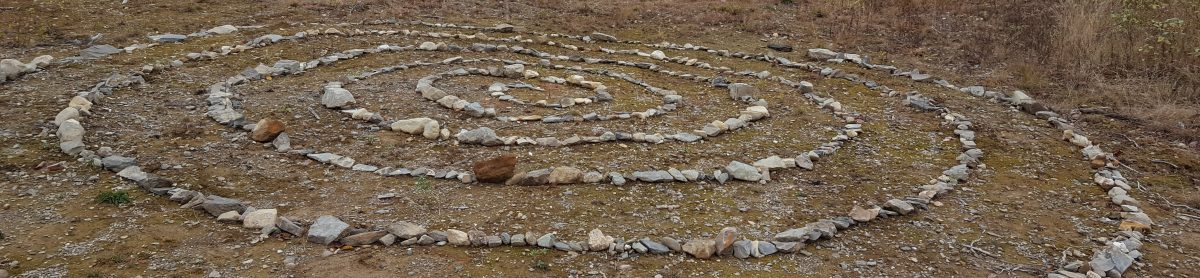
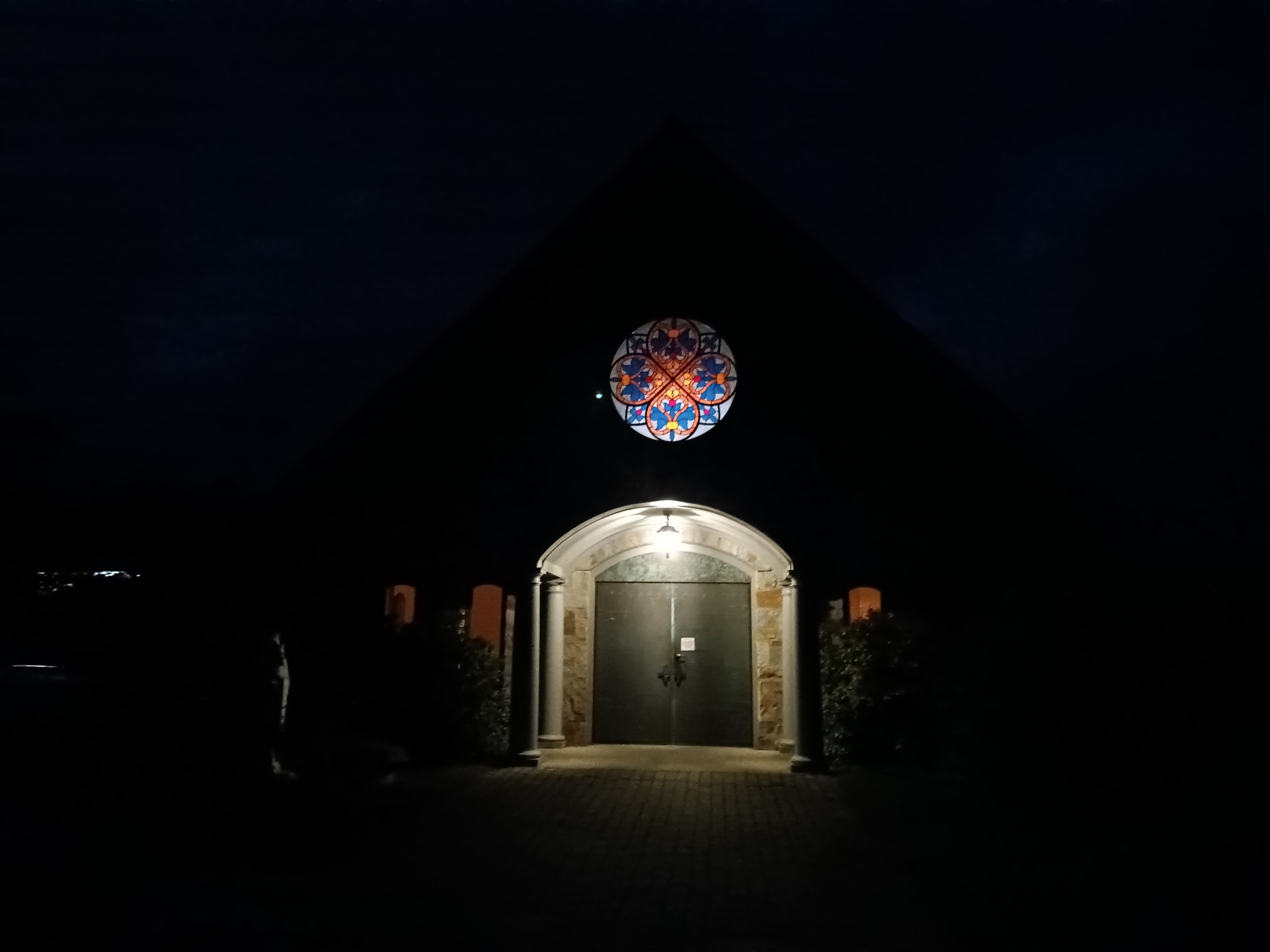
Photo from St. Scholastica Priory, Petersham, MA
Prayer of Transformation / Confession (DMA)
God of Majesty and Might, We struggle sometimes in placing you as priority. We struggle with time, our commitments, with needs and desires, with the limits of our attention. Please help us to do as we say we wish. Teach us practices that help us center you in our lives. Lead us in ways that will strengthen our faith. Help us cut free of our distractions. Let us be and live as the disciples we are called to be.
Affirmation of Love / Assurance of Pardon (DMA)
Jesus said, “Follow me,” and the disciples dropped what they were doing and followed. We too are called to follow. Let us find what that means for us. Jesus loved his disciples and he loves you, even if you struggle in the following.
As I read the words, I thought to myself, “Whoops! I’m off kilter.” For me, it is not a matter of what more I can get done, but the reverse: have I stopped or slowed to sit with Jesus for a moment? Have I read scripture – not because I’m preparing for a Bible Study or a sermon, but because I just want to luxuriate in the word? Have I prayed not because I’m praying for someone else or writing liturgy, but because I need to talk to God?
What I realized today from the incitement of my own writing is that it is time for a breath and a short walk with Jesus . . .
I pray that these words might inspire you as well. If you need to be reminded to act on behalf of Christ then hear that; and if you need to be reminded that Jesus is calling you simply to sit at his feet, then do that. Either way, may the love of God be with you today.
All Rights reserved. Permission granted for usage in religious or educational settings with attribution.
An American was sitting in a Ghanian worship service. They had been advised to have small bills for giving. So they had come prepared for the first collection. They danced up and put 20 cedis in the bowl.
When the second collection came, again the American confidently had cedis ready. They tucked it in their palm and brought it up to deposit with all the other bills.
And then there was a third go round. The American stiffened a bit. This seemed a bit much. They had not prepared for another collection. As they dug through their wallet, they found 50 cedis bill and 1,000 cedis bill. They pulled the 50 out and figured that wasn’t too, too much more. It would be ok.
No sooner had the 50 cedis hit the bucket than the pastor called for a special collection for a special project. The American sat stunned. He knew that he could just pretend to put in money. Others had told him that many of the poorer people did that. It was more about intent than action. The 1,000 cedis was the last money he had with him.
He danced his way up to the bowl and opened his hand.
QUESTION TO PONDER: OUR GOD CALLS US TO GIVE WITH A GENEROUS HEART. ARE WE WILLING TO GIVE BEYOND WHAT MAY SEEM PRACTICAL?
PRAYER: Generous God, Forgive my tendency to horde for days which may never come. Inspire me to live in generosity and to act in abundance. Help me to discern when you are asking me to stretch beyond my vision of possibility. May I give with a joyful heart and with no expectation of return. AMEN
All rights reserved. Permission to use in religious or educational purposes with citation.
They move like individual cells through our veins,
thinking they each have a mind of their own,
but acting as one flowing mass –
A river of humanity.
One and yet all;
all and yet one.
Murmur. Murmur, murmur.
“I need to stop in the restroom.”
“We’re on time.”
“We’re late.”
Clip, clop.
Hhhhhhph
Peal me from the chaos of humanity, O God. Remind me to slow down, to follow, to notice why you sent me to this place at this time. Remind me simultaneously of my autonomy and my communal responsibility. Use me wherever I am toward your good. Help me to set aside what I perceive as my purpose and make room for whatever you imagine my purpose today. AMEN
All rights reserved. Permission for use for religious or educational reasons with citation.
One of the ways that I am finding sanity in an ever chaotic world is to participate in a local writing group. Although my purpose of this site is to share with you my liturgical writing, the site is called Wandering and Wondering, so join my in a little diversion.
Here are 5 Ekphrastic writing pieces. Ekphrastic writing as it was introduced to us is using a picture or other non-literary piece as a jumping off piece for our writing. This is the site that the leader of the group this month cited to help us understand what was expected.
Here are my experiments in this writing style:
#1
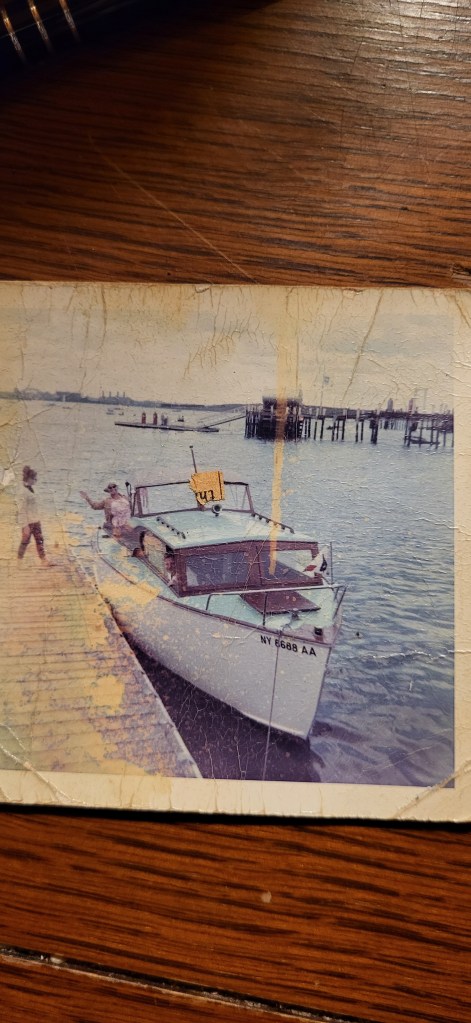
A memory not mine By dawn m. adams
In amongst the pages was a memory before my time of a boat upon the ocean that in my lifetime only sat on cinderblocks growing weeds and harboring wasps.
The photo, though, is of a life before the time of kids, responsibilities, and bills.
The photo’s bent and crackling face give testimony to its ages as it tries unsuccessfully to hold its color – mustard yellow-brown blotches overtaking the dock and threatening the people in its frame. My mother walks on the dock, approaching the teal topped wooden cabin cruiser. A smiling stranger puts out a hand to her and another pears out the captain’s window. It seems that all but she knows they are being photographed.
Is it my father taking the still? He is nowhere in sight.
The sea is calm and the boat only gently rocks as it waits tethered to the dock for its passengers.
Atop the boat, likely stuck by accident, is a fragment of upside-down “th” sticker From another long-lost memory, trying to tell its own story.
#2
The Mustard Seed Retold
By Dawn M. Adams
A single seed suffers in the ground like the pearl of great price, its value is beyond compare. Down its roots burrow, and up its branches grow. For such a small dull seed, it flourishes above the ground into a bush flush with yellow flowers: each branch a home to another species of bird.
What a racket must come from that bush: chickadee, heron, thrush, and raven; swallow, cardinal, orange tanager, and jay.
They make their home within the mustard bush, taking refuge from the harsh world. Together creating a brash combination of yellow, green, tangerine, and blue.
Every hue and every caw testifying To the power and wonder of a single seed willing to grow in a harrowing world .
If you would like to see the picture from which it was inspired, visit Kelly Latimore’s page.
#3
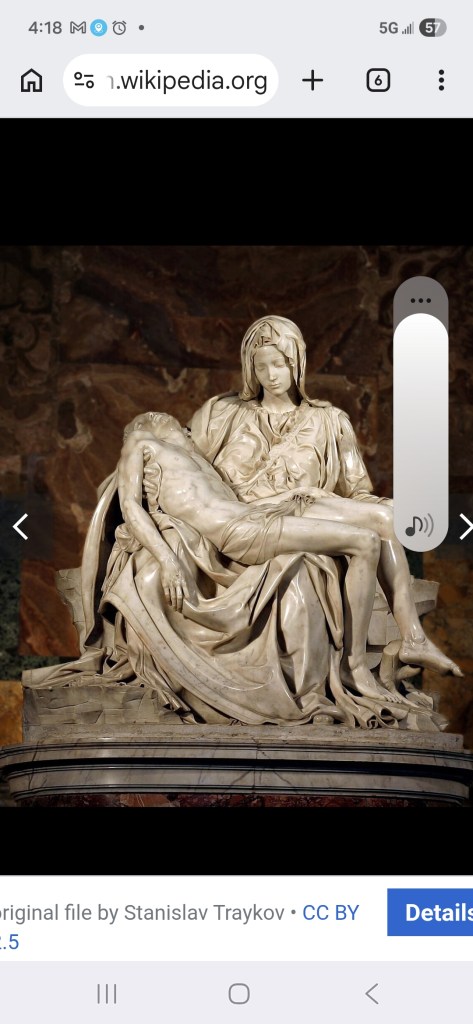
A Mother’s Lament
A response to Michelangelo’s Pieta
By Dawn M. Adams
How?
How could it come to this?
I said, “Yes!”
I carried you within me.
I birthed you.
Was it all for naught?
Would God be so cruel?
I hold you now –
your body ravaged and worn.
What I would give to bring you back.
I hear them singing, “Where you there?”
and my tears cry out, “I was. I am. Where were you?”
I hold him hoping for another miracle, hoping he will awaken,
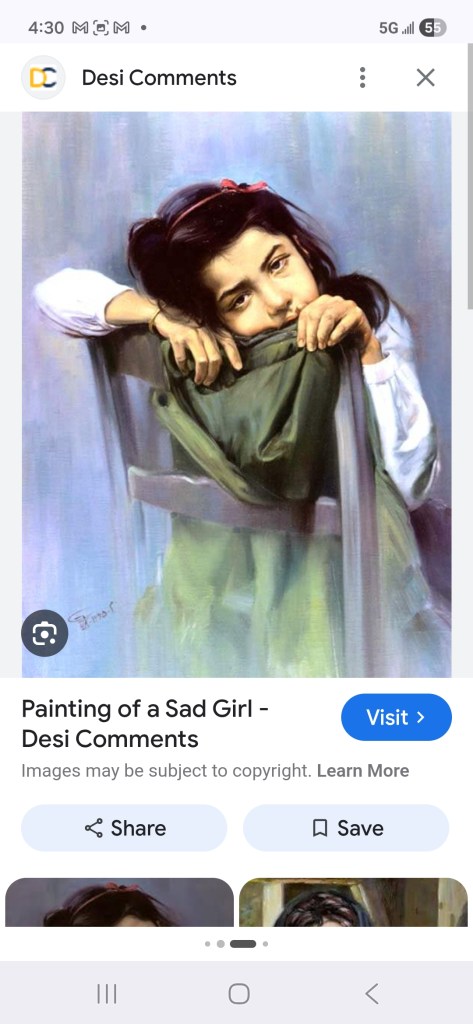
I so wish they’d stop fighting. They both say they love me and yet they will not stop. Don’t they know what such hostility does to a young heart?
I sit here waiting and watching, wishing I was somewhere else, anywhere else.
The whole thing makes me tired. They toss me back and forth like a prized football – not realizing that in the tossing that I am getting scuffed and bruised.
Mom made me dress in my Sunday best and even put a red ribbon in my hair. I think she wanted dad to think everything was normal at home without him, that we were getting along just fine without him; but there are days mom doesn’t even get out of bed. Days that I have to try to figure out what to make for dinner – – – Did you know that fried bologna can be pretty good when put on Wonder bread with a squeeze of ketchup?
If they keep fighting like this I may as well just put on my jacket and disappear. I wonder if they’d even notice that I left.
I bet mom would leave thinking I went upstairs to my room ; and I bet dad would think she dragged me back home with her.
How long do you think it would be before they realized that I was with neither of them, but instead out in the world hoping to find a rainbow in the storm.
I am unclear who to attribute this painting to as it seems to have many attributions on the web.
I would love to read your version of a Ekphrastic writing. Please feel free to post or link your work below.
NOTE: All rights reserved for the works above. It you would like to use, please contact me with purpose and usage proposal.
In the writing group that I have joined, we were tasked with writing an abecedary story or poem. An abecedary is an old fashioned ABC style form of writing where each line begins with a progressive letter of the alphabet.
For those who may be interested the 119th Psalm is written in this style. It however used the Hebrew language, not English.
All that to be said, this is a fun style to play with. I actually found myself waking up in the middle of the night to write. Here are four for your enjoyment or horror – you decide.
1st Abecedary by Dawn M. Adams
At the
Beginning of
Creation,
Dawn
Early
Found the
Ground,
Hailing
In justice,
Knowledge,
Love.
Man, though, in
Noble pursuit
Opened
Pandora’s box
Quietly
Releasing
Selfishness and greed,
Trading
Universal
Virtues
For
Wealth.
eXtremes broke the day.
Yearning to begin again, we wish we could be like the
Zinnea. New each spring. But alas beginnings only come once.
Now we are called to heal, repair, and mend rather than simply starting again.
2nd Abecedary by Dawn M. Adams
“At the beginning,” we tend to say.
But the beginning of what? Where?
Can we even truly know the beginning?
Do we really know what came first?
Everything seems to have a precedent.
Finding the true beginning would mean
Going back and back and back to the beginning of
History.
“In the beginning”
Just estimates and approximates our
Knowledge.
Legends though reach farther than that.
Myths weave wonders creating even earlier tales.
No clear beginning exists.
One says this. Another that.
People disagree.
Questions arise.
Really, does it matter when it all
Started?
Time is an illusion, best left alone.
Universal agreement is not needed.
Very little is needed.
When we live
eXposed to time,
You only need to live in the now.
Zero agreement on how it came to be.
3rd Abecedary – A Zebra in my Car
by Dawn M. Adams
At first Frank just
Backed away from the
Car
Determined not to
Escalate the situation. He stepped back slowly and calmly
Finding what he thought was safe
Ground.
He looked around, searching for a way to
Innocuously retreat so that he could return in the daylight with a plan of action.
Judiciously, he took stock of the area, paying attention to every exit, every pothole, every curb and obstacle in case he needed to retreat more quickly. He
Knew it would be important to have options. He
Looked around to see if there were any other people around that he
Might implore for help; but
Night left this parking area empty. There were
Other cars parked in the vicinity, but not another
Person to be seen.
Quietly, he dared to take another couple of steps back. He knew this wasn’t a perfect plan, but what else could he do in the middle of the night. He would
Return for his car in the daylight, perhaps with
Support of others who might help. They would
Together make a plan and
Use their joint resources to gain entry to his car. Of course, part of him wondered who would believe him. His friends would, no doubt, believe that he was just
Very drunk.
Why else would he abandon his car in a parking lot in the middle of the night? Who would believe such
eXtremely odd circumstances? Even he acknowledged that he would have a hard time believing a friend and would think that they had woven a
Yarn and were pulling his leg. Who would believe that a
Zebra kept me from getting in my car? Where did such a beast come from anyway? The questions didn’t really matter in the moment. Step one was to retreat to safety so that he could return another day. Perhaps then the Zebra would be gone. On the other hand, maybe it would be better if the Zebra stayed, then at least someone might understand why he had to leave his car in the parking lot and call an Uber to get home.
4th Abecedary – A Magic Potion
By Dawn M. Adams
At the
Back of the
Cabinet I found an eye-
Dropper. I had forgotten that I had put it there all those years ago. That little
Eye-dropper contained the smallest, single drop of
Flajewelan Jelly: a rare but precious gift
Given to me from my grandmother and to her by hers. The jelly was made by
Heating and boiling low and long the
Insides of the rare Kaputchen flower, which only blooms for a single day in
June, with the
Kipper straw plucked from the cliffs of
Llewelyn. To that is added a
Magical spell and water from the spring of Endive. This concoction can only be made by the light of the full moon and must be finished by pressing it through a fine sieve. The mixture should almost clear,
No impurities. Then it can be packaged for distribution, but it is so powerful that one does not need a barrel or bowl or even a cup – a simple eyedropper will do. Fortunately, it can sit like that for days, weeks, month, decades, generations . . . the
Only problem is that with time come forgetfulness. Thus, much of this magical
Potion has been lost, forgotten in some hidden corner or tossed away thinking that it is a worthless nothing. I, though, still have my dose
Quietly stashed in the back of my kitchen cabinet. I don’t think anyone else in my household even knows it’s there,
Resting for the day when I finally decide it is needed. Is this, I suddenly wonder, why it is
Still here? Is
This why it has been passed secretively from generation to generation
Unused? Has its recipe been remembered but the full potency of its use forgotten? Have the
Very people entrusted with its keeping forgotten its true powers or do they always have hope that the
World will fix itself? Do they ignore the
Xenophobia, the ethnocentrism, racism, prejudice, and discrimination or do they just live in hope that we will find a way to fix it ourselves? I have to acknowledge that at 92, I have
Yet to draw it from the shelf except when it gets packed to move to a new kitchen in a new house. Soon I suspect, I will either have to use it or pass it on myself. I wonder if I will live in hope or if it will finally be time to excrete the sacred droplet, say the magic words,
“Zirad – Zam – Zadee” and live into whatever happens next.
NOTE: All rights reserved to writings above.
If you decide to play with this writing style, I would love to hear what you come up with. Please post below.
Here is a fun and interesting writing prompt that you can take into any book or character in the Bible. Frankly, you can use it in secular ways as well.
Take a word – Book of the Bible, Character, Value. I suppose even a short verse.
Write it vertically like you want to create an acrostic poem
Then write a story / poem being sure to include words that begin with those letters.
This is a fun and interesting way to engage with the text.
Here is an example of one that I wrote for Genesis (specifically Genesis 1:1-2)
Generally, in the beginning, we believe, is where things started, but our beginning begins in the deep. A deep that
Existed before time: a place of void and darkness, but also of possibility and
Newness. Nothingness is not nothingness if it is describable, if it is navigable, if it
Exists. So what was before there was? What was this vast
Sea that the wind blew on? How was it born? How did it begin? Was there something before that melted
Into the primordial soup? Or was this the beginning of God’s
Soup recipe? Set one part chaos to simmer. Stir lightly with the movement of the Spirit. Wait. Watch. And voila– Life!
All Rights Reserved. Permission to used in educational or religious settings with citation.
This week in mid-week meditation, I offered two prompts based on the same poems. I randomly picked poems and then asked AI to remove punctuation and capitalization and randomize the words. The first prompt invited the writers to write using the words before them as a base.
For Example, here were my words:
films intentionally loving of the their feet while art culture borders hesitation possibilities fire paint artists loud or wall see and creative canvas kind-based canvas directed sprinting mumblings conscience limitations and all us deliberately windstorms blast motivation into with quality do art their struggle quiet questions without run does to and with move people or intentionally paint and has loving and and life-centered does toward can’t doubts with cameras name has create misrepresentations has blasts gates culture ideas advance and see a world centered civilization and and and the talk and struggle move escape and searching not and good or feet questionably questionably phones gates has ideas doubts the loving own toward move fire justice of people their advance loving art themselves has of not people computers its civilization paint forward clear canvas intentions blasts daily and pen paper question run run or walls feet as mumblings based with community run paint souls good rulers with and name quietly paint searching artists and loving has definitions and has gatekeepers and daily windstorms loving loving canvas with toward and and paint the
I gave us 15 minutes, this is what I wrote:
Untitled
To intentionally paint the world with love creates life.
There are no limitations
Civilization tries to rule
setting borders
and erecting walls.
It misrepresents truth
and sews doubts,
leaving society lost and lonely.
Daily windstorms tattering the art
that has so lovingly been created.
But the art of love
offers possibilities beyond the gates culture has created.
Love offers justice
it leans in with questions
and listens.
It paints quietly, slowly, subtly,
and brashly, without hesitation using bold strokes.
We then took an additional 10 minutes to write a poem based on the style they noticed in the poem. This is what I created:
Remembering Ezekiel Kallberg
children are fed what we feed them
they cannot forge on their own.
they are reliant on what we bring – good or bad.
children not only fill themselves
with the nutrients we provide;
But also the love, the wonder,
the hope, the resilience we fill them with
children absorb our ways
without us ever needing to
speak and perhaps even
before their ears can hear
outside the womb.
what shall we offer this
hungry one – ancient
dusty artifacts, a diet of anger
and war, a meal made
of mush,
or shall we choose to gather
them in our lap and blanket
them in love,
shall we surround them with
support and welcome them
into wonder.
shall we put before them a
feast which tantalizes them
and invites them to taste,
touch, sample
and decide for themselves
their favorites.
and perhaps even one day
teach them to cook.
Neither of these are perfect poems, but the process is like putting compost around your garden. The nutrients seep in and before you know fruit is produced.
I encourage you to give it a try and see what your process might seed.
All Rights reserved. For permission to use, please send me a quick email to explain how you would like to use this process or product.
The past two sessions of our Mid-Week Meditation, the literary edition, we have explored the concept of midrash (the idea of filling in the missing aspects of a biblical text). Last week, in worship, we read the story of the Paul and Silas getting put in prison which begins with their excising a demon from a slave girl who follows them calling out, “These men are servants of the Most High God, who are telling you the way to be saved”. Sadly, the text (Acts 16:16-40) says that Silas rids her of the demon not to cure her or help her, but in his annoyance. The story then pivots to the trial of Paul and Silas who are sent to prison for this crime and this poor slave girl is left without her “gift” and still in slavery. In the sermon, I asked people to think more about this gift, who she was, how she was marginalized on multiple fronts, and even dared to wonder if what Paul and Silas did was helpful or harmful to this girls future.
In our meditation group, I asked them to think even more about this girl and write her story. Because so little is written about her, the leeway of what might be written is pretty wide.
This week I offered them pictures of Biblical stories like Rahab’s red cord, Moses being put in the basket and sent down the Nile, the rubble of the walls of Jericho, the woman at the well with Jesus, etc. Instead of writing from the perspective of the human characters in the story, I invited them to write from the perspective of an inanimate object. Mine for example was told from the perspective of a tambourine that the daughter of Jephthah (Judges 11:30-40).
Both of these exercises, while not scripturally sound, invited participants to interact with the scriptural texts in way they had not before. It opened up questions and curiosities; and invited us into a much deeper conversation.
I invite you to try either of these writing exercises and share them with us below.
I breathed the air deeply. It cleansed my airway, my lungs, and my mind.
Now it is as if cotton balls have been pulled from my ears
and scales from my I eyes.
The world brightens around me, and I am gifted with the chatter of God’s creation.
I hear the vibrating hum of the wings of this spring’s first hummingbird,
The water ripples of two geese gliding by,
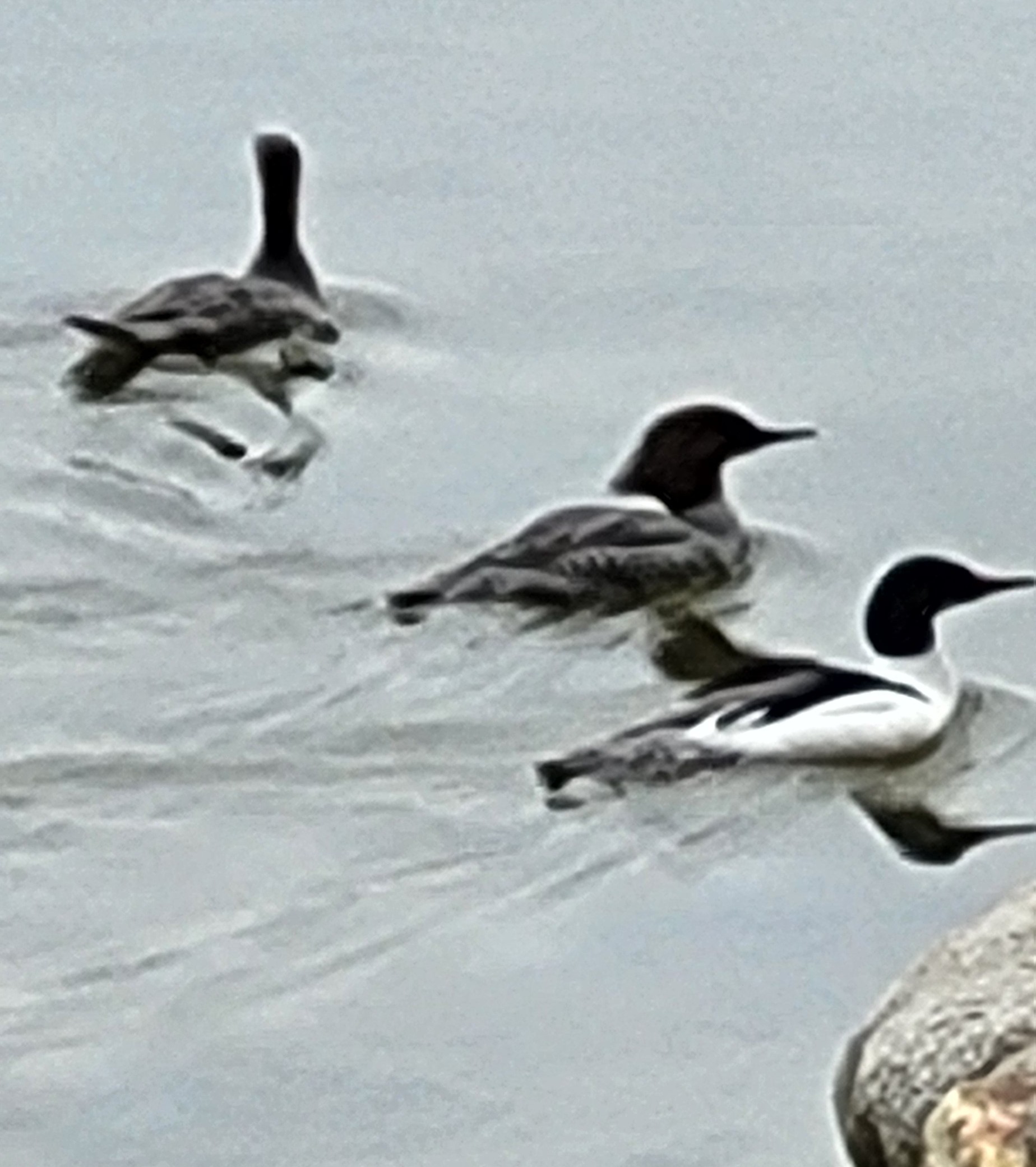
The call of the loon across the lake,
The twitter,
twitter,
twitter,
twitter,
twitter
of the unseen.
I ask myself, “Is it this simple?”
“Can it be this simple?”
“Is it this simple?”
Rest in my garden, little one, and you will be renewed.
A morning picture on the lake that my husband took.
The Patient Fisherman
The fishermen have come to the lake.
They set their lines oh so patiently
and then seem only to wait.
Are they waiting for fish?
Or are they waiting for You to come by an holler,
“Follow me!”
They do not seem anxious in their waiting,
but instead extraordinarily patient:
Not a muscle twitches.
They keep just a soft finger on the line
ready . . .
Both of these poems were written by me and all rights are reserved. Permission is given to use in a religious or educational setting with attribution.Both pictures are taken in Wolfeboro, NH. The loons by me and the fog on the lake by George Adams.All rights reserved.