Using Words and Style as a Writing Prompt

This week in mid-week meditation, I offered two prompts based on the same poems. I randomly picked poems and then asked AI to remove punctuation and capitalization and randomize the words. The first prompt invited the writers to write using the words before them as a base.

For Example, here were my words:

films intentionally loving of the their feet while art culture borders hesitation possibilities fire paint artists loud or wall see and creative canvas kind-based canvas directed sprinting mumblings conscience limitations and all us deliberately windstorms blast motivation into with quality do art their struggle quiet questions without run does to and with move people or intentionally paint and has loving and and life-centered does toward can’t doubts with cameras name has create misrepresentations has blasts gates culture ideas advance and see a world centered civilization and and and the talk and struggle move escape and searching not and good or feet questionably questionably phones gates has ideas doubts the loving own toward move fire justice of people their advance loving art themselves has of not people computers its civilization paint forward clear canvas intentions blasts daily and pen paper question run run or walls feet as mumblings based with community run paint souls good rulers with and name quietly paint searching artists and loving has definitions and has gatekeepers and daily windstorms loving loving canvas with toward and and paint the

I gave us 15 minutes, this is what I wrote:

Untitled

To intentionally paint the world with love creates life.

There are no limitations

Civilization tries to rule

setting borders

and erecting walls.

It misrepresents truth

and sews doubts,

leaving society lost and lonely.

Daily windstorms tattering the art

that has so lovingly been created.

But the art of love

offers possibilities beyond the gates culture has created.

Love offers justice

it leans in with questions

and listens.

It paints quietly, slowly, subtly,

and brashly, without hesitation using bold strokes.

There are no gate keepers here

simply lovers loving:

a world searching for good,

souls seeking and searching

for new canvases on which to

paint beauty and possibility.

Then, I offered them the opportunity to read the actual poem. Mine was Art IV: Remembering Gwendolyn Brooks by Haki R. Madhubuti.

We then took an additional 10 minutes to write a poem based on the style they noticed in the poem. This is what I created:

Remembering Ezekiel Kallberg

children are fed what we feed them

they cannot forge on their own.

they are reliant on what we bring – good or bad.

children not only fill themselves

with the nutrients we provide;

But also the love, the wonder,

the hope, the resilience we fill them with

children absorb our ways

without us ever needing to

speak and perhaps even

before their ears can hear

outside the womb.

what shall we offer this

hungry one – ancient

dusty artifacts, a diet of anger

and war, a meal made

of mush,

or shall we choose to gather

them in our lap and blanket

them in love,

shall we surround them with

support and welcome them

into wonder.

shall we put before them a

feast which tantalizes them

and invites them to taste,

touch, sample

and decide for themselves

their favorites.

and perhaps even one day

teach them to cook.

Neither of these are perfect poems, but the process is like putting compost around your garden. The nutrients seep in and before you know fruit is produced.

I encourage you to give it a try and see what your process might seed.

All Rights reserved. For permission to use, please send me a quick email to explain how you would like to use this process or product.
Blessed to be a blessing

“I will make you into a great nation,
    and I will bless you;
I will make your name great,
    and you will be a blessing.
I will bless those who bless you,
    and whoever curses you I will curse;
and all peoples on earth
    will be blessed through you.” – Genesis 12:2-3

Can you imagine a world where we walked around consciously blessing one another and the world around us? Might this simple act deflate the tensions and anxiety that pervade our society. Could you imagine if we sought to find the holy chard (tikkun olam) that everyone and everything contained? or sought the holy fingerprint of the potter himself (Isaiah 64:8)?

What would it mean to begin to see the world as holy, to act as if it were, and to encourage it to be so? The act of blessings is an ancient practice that perhaps we should reinstitute. Doing so does not require an act of congress, nor a majority vote, it simply means that you and I make it so. Maybe, if we are lucky, the practice will grow.

Step one is simply to look with new eyes and see the beauty before us (Remember beauty is not always external; and beauty is not always what society names it to be.).

Step two is to name what you see or what you hope to see. If I were blessing my fireplace this morning, I might offer a blessing for the many days of warmth that it has brought to my house allowing me to be comfortable and to invite friends and family within. If I were blessing a person, I might offer a hope, “May this new year offer you opportunity and growth. May you find your footing, feel your strength, and be granted the courage to live fully into who you were meant to be.”

Step three is to share your blessing. You may say it quietly to God, say it aloud to the another person, or maybe take a moment to drop a note or a text to let them know that you are thinking about them. You might even post it on social media.

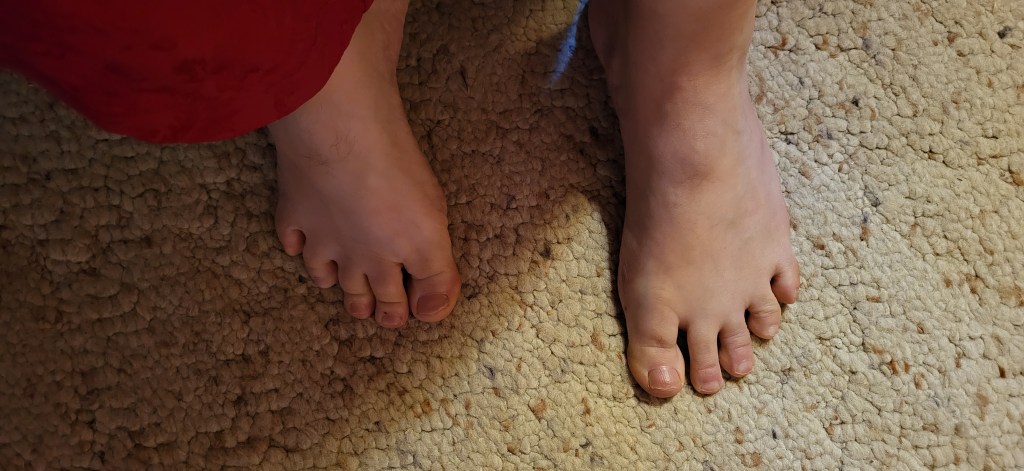
Blessings can also be done quietly within your heart as a prayer to God. I started to bless my feet in the morning after my mother passed away. She had thrown blood clots in her legs which subsequently caused an unhealing foot wound and caused the loss of several toes. My kids even were known to refer to her as Grandma Boo Boo Foot because, in their memory, she could never wear two shoes and usually need the assistance of a wheelchair. So now when my feet hit the floor I try to remember that even getting up in the morning and standing is not a blessing that everyone is afforded.

A Blessing for Feet

I wiggle them awake

and say, “Thank you!”

I touch them to the ground

and say, “Thank you!”

I press my weight upon them

and say, “Thank you!”

“Thank you little toes

and feet

and ankles.

Thank you phalanges

and metatarsals

and navicular bone.

Thank you to my muscles

and my tendons

and all the nerves

that go into each step I take.

Thank you God for my feet.

Bless them as they carry me through my day.

AMEN

NOTE: All rights are reserved for this blessing or anything published on this page. Permission is given for usage in religious or educational settings with citation.


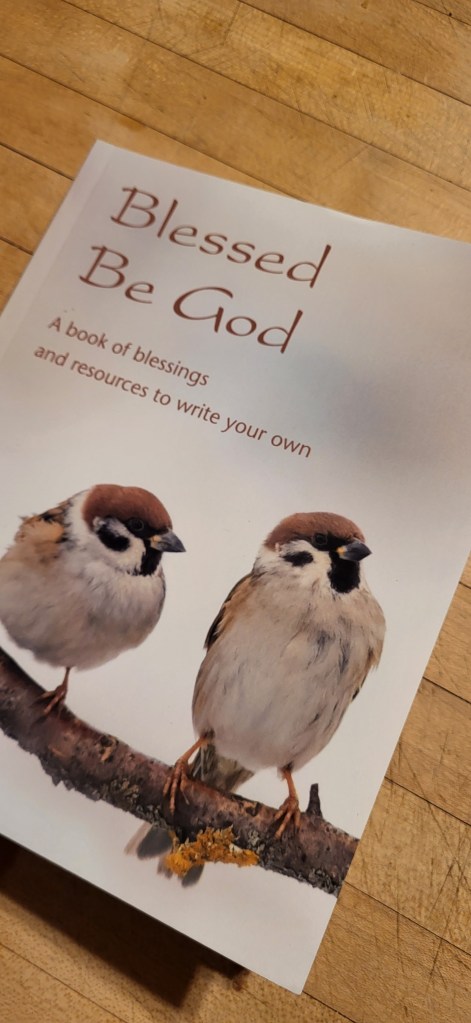
If you would like to read some more blessings including two of my own, check out Ruth Burgess’ book from Wild Goose Publications, Blessed Be God:

Sacred Noticing

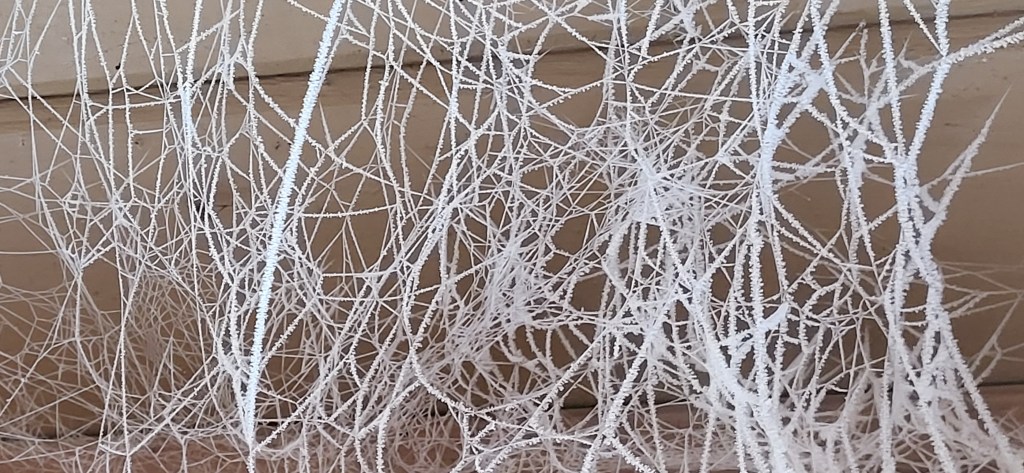
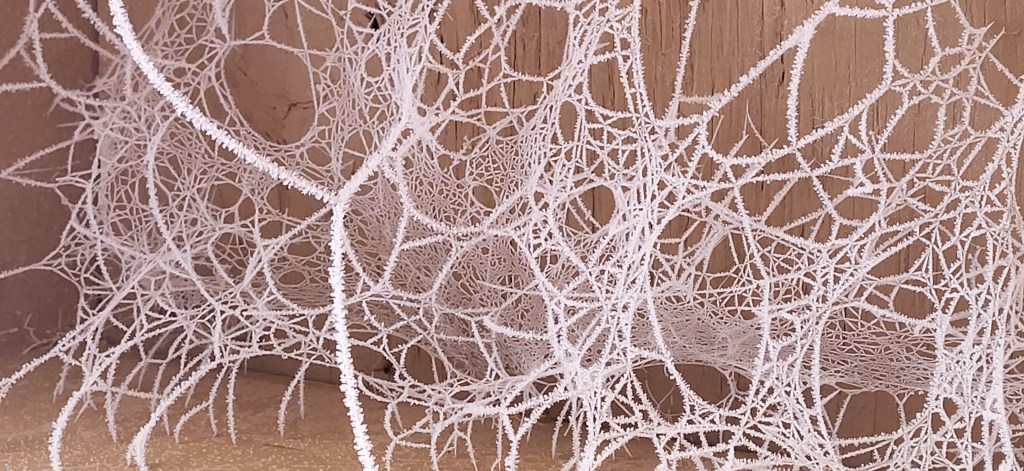
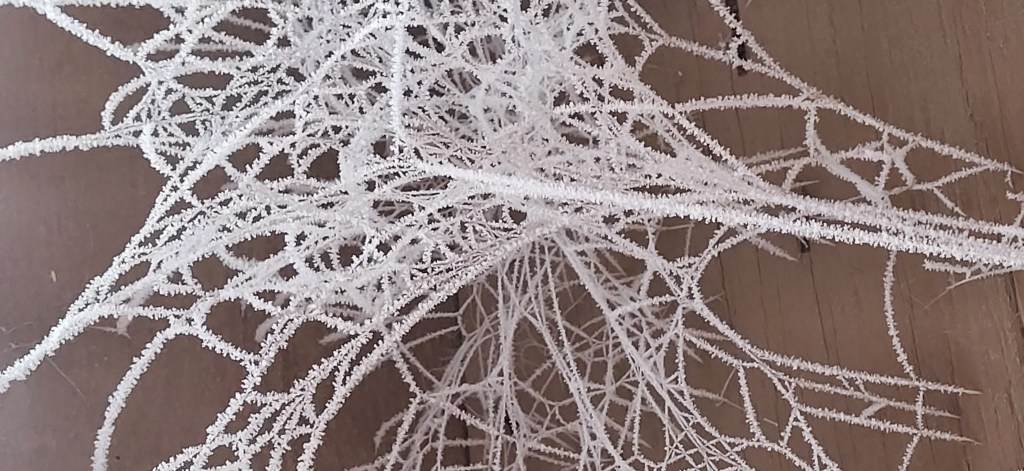
Yesterday, as I was preparing to leave for church, I looked out our backdoor to the lake and there I saw the beauty of creation in a way I had never seen it before.

I think it was a rare confluence of events that made it so. In the eves of the overhang to the porch were these fragile ice crystal cobwebs. They were invisible to the naked eye normally (not that we’ve been doing a whole lot of outdoor sitting these days in -6 degrees), but the kerosene heater with an outdoor vent had come on. It was very cold, and the eves caught the moisture.

Every moisture molecule that landed on the spider’s web froze immediately creating this crystalline creation. Each layer upon layer brought forward and made visible the beauty of the underlying design. It is surely a wonder to behold – similar to dew captured on a web as it glints in the sunlight. Part of the wonder in both of these situations is its impermanence. It was there in this moment, but within a few hours they were invisible again. It was a deep reminder to pay attention – deep attention.

When we think of prayer, we often think of words that we say out into the world, but perhaps we should expand our understanding to include that which enters into us as well. Perhaps our prayer is that moment when our breath is caught and all we can utter are syllables: “ahh”, “ohh”, “wow”.

Sacred noticing is a spiritual practice to always be on the look out for wonder and to be willing to pause the rest of the world so that you can fully take it in.

In this case, I called my husband over to behold it with me and he too offered the sacred prayer of “Wow! That is amazing.”


What have you seen today that has taken your breath away?

A fun confirmation activity

This week we had the second of of our confirmation classes. This time we focused on Jesus. In each class, I’m trying to teach them a spiritual practice, engage them in actually reading the Bible, and connect Christian living into their everyday life.

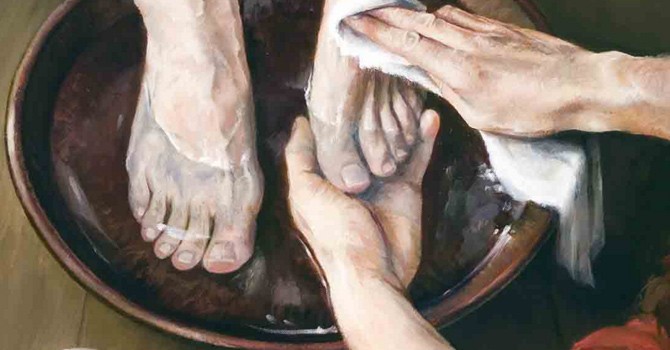
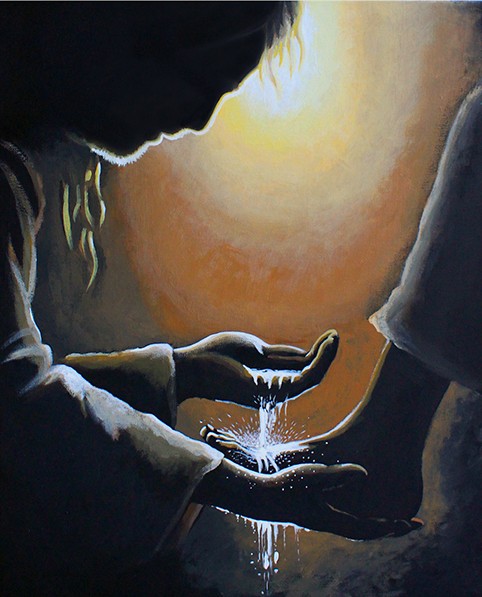
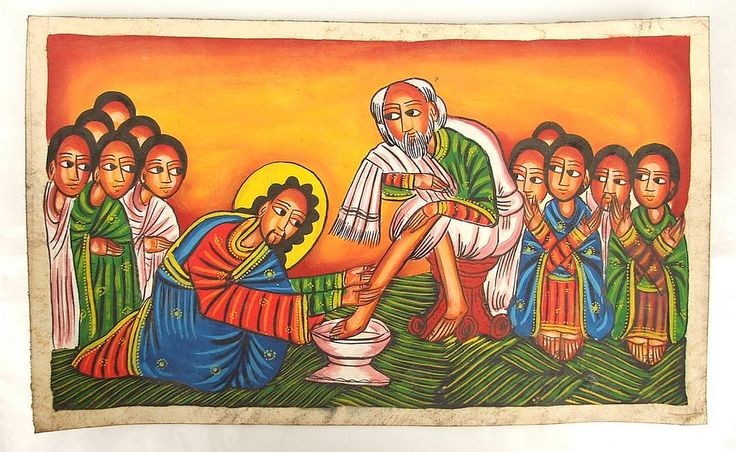
So this week we started with a visio divina from Jesus washing a disciples feet. I had them look at three different pictures for three minutes each in silence and then talk about what they liked and found compelling.

You could no doubt pick any few pictures, but I appreciated how this scaled outward and showed something I suspected that they were at least somewhat familiar with. After sharing our reflections, we talked about how this action revealed a bit about Jesus’ view on leadership and then read Mark 2:23-28 which led to again a question about Jesus’ leadership style and general theology.

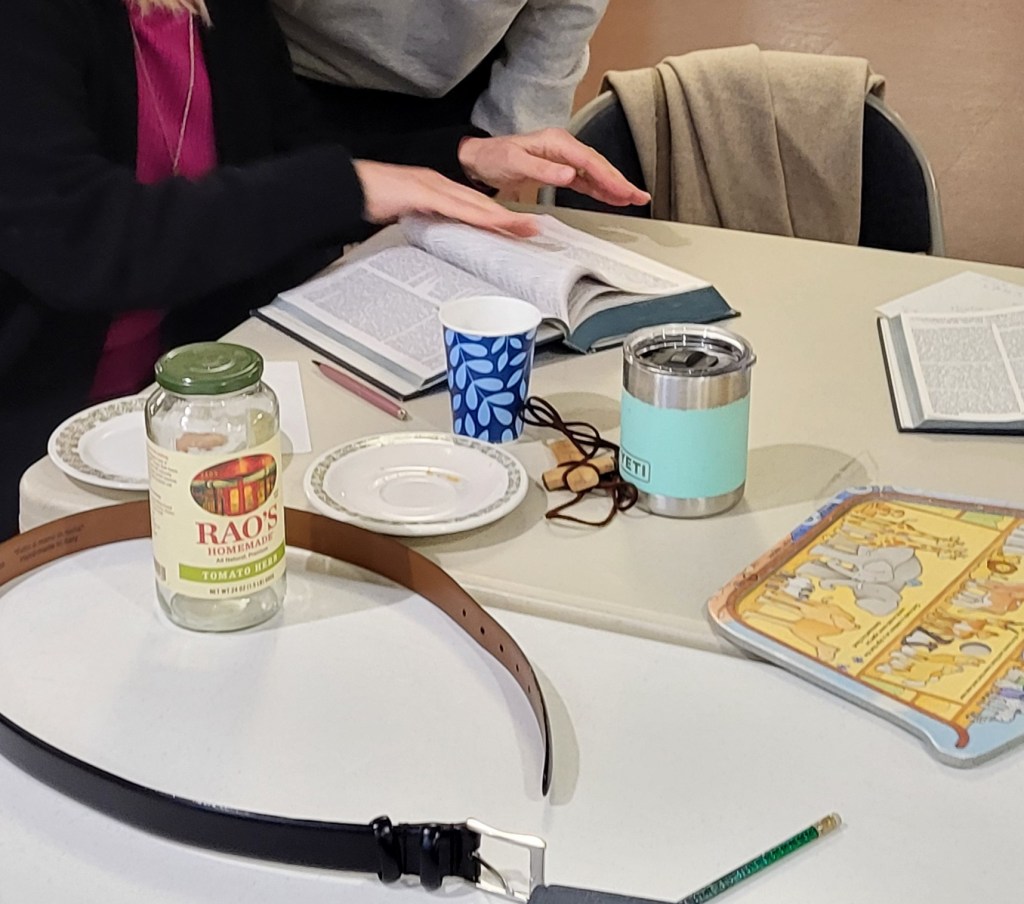
At this point, the kids needed a little fun, so we began a competitive sword drill. Sword drills are not too common in my experience of my progressive Christian arena, but I do think it can be used as a fun way to get to know the Bible. Since this is a relatively new church to me and I wasn’t sure about the kids familiarity with the Biblical text I limited our scope to just the gospels. Doing so also gave me permission to offer some vocabulary like gospel and synoptic. I was even able to talk a little bit about the potentially lost source of Q (Quelle) and the theory of when each book was potentially written.

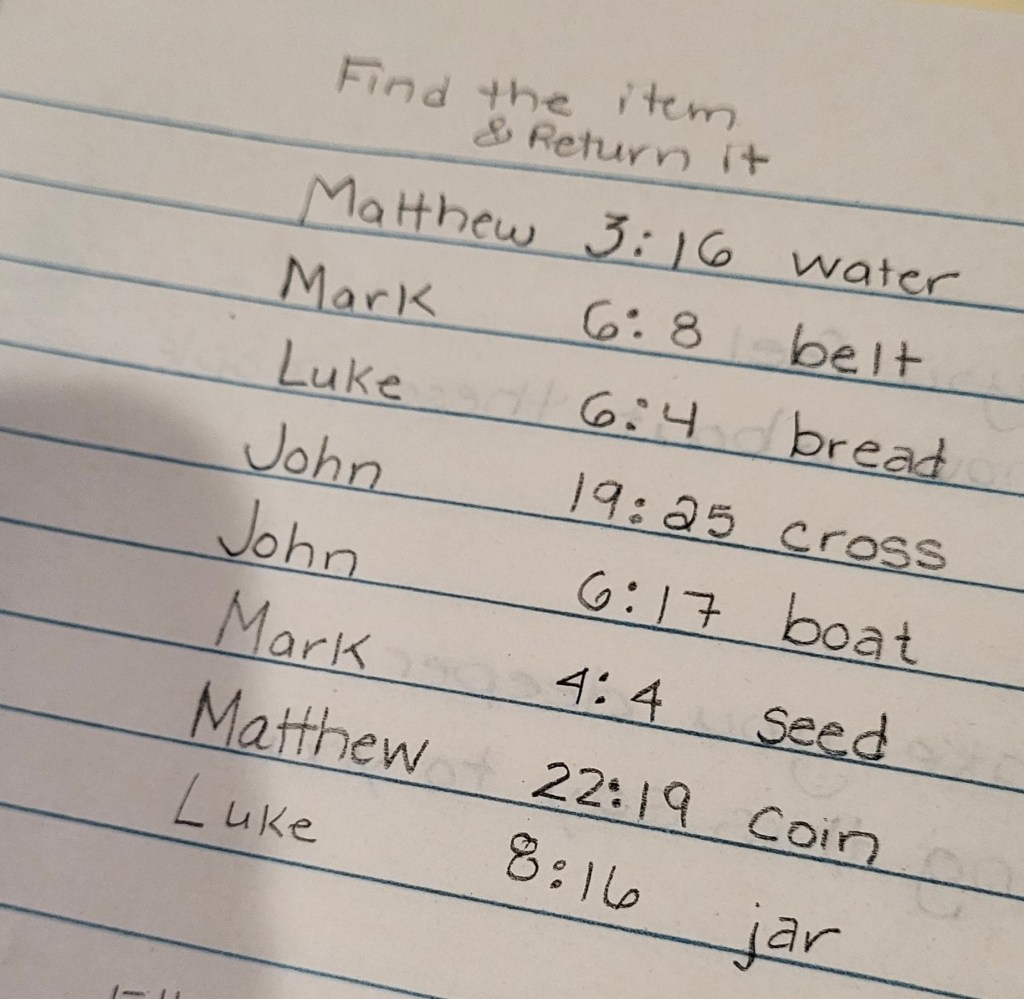
The idea of the game is to have a prewritten list of scriptures for the teams to find. When they find the scripture, the scripture will name an item that you have placed some distance away from them. They have to go find the item and return it before the other. Here is the list that I created:

BE FOREWARNED – – -I learned that I had overlooked that in the Mark 6:8 scripture there is actually a belt and bread. On the positive, the scripture says no bread, but yes a belt. So you could argue the need for a more careful reading. In may case, I accepted both answers.

Also note, that to make this even more fun, we set the kids up in competition with the parents. If you are wondering who won, the kids crushed it.

Following the game, we moved into some ethical case studies and instead of trying to devise solutions, we tried to come up with questions Jesus might ask of the situation or himself to decide what the next best step was. (The case studies were borrowed from Goodcharacter.com )

The whole class was only 90 minutes, and I dare say they even enjoyed it a bit.