Mid-week meditation – Literary Version

Here is a fun and interesting writing prompt that you can take into any book or character in the Bible. Frankly, you can use it in secular ways as well.

  1. Take a word – Book of the Bible, Character, Value. I suppose even a short verse.
  2. Write it vertically like you want to create an acrostic poem
  3. Then write a story / poem being sure to include words that begin with those letters.

This is a fun and interesting way to engage with the text.

Here is an example of one that I wrote for Genesis (specifically Genesis 1:1-2)

Generally, in the beginning, we believe, is where things started, but our beginning begins in the deep. A deep that

Existed before time: a place of void and darkness, but also of possibility and

Newness.  Nothingness is not nothingness if it is describable, if it is navigable, if it

Exists. So what was before there was? What was this vast

Sea that the wind blew on? How was it born? How did it begin? Was there something before that melted

Into the primordial soup? Or was this the beginning of God’s

Soup recipe?  Set one part chaos to simmer.  Stir lightly with the movement of the Spirit.  Wait. Watch. And voila– Life!

All Rights Reserved. Permission to used in educational or religious settings with citation.
Ode to the one I never knew:

A minister’s memory

By Rev. Dawn M. Adams

I stand.

I speak.

I reminisce,

but I never had a coffee

                                or beer

                                or donut with you.

We never sat on the porch and talked.

We never took a walk,

or called each other on overwhelming days.

And yet,

I remember.

I share.

I weave together your life.

I’ve never seen your face (except in a picture).

I’ve never held your hand.

I’ve never seen the mischievous twinkle in your eyes.

I have, though, laughed your jokes retold,

                cried at your loss,

                wondered about you more than people realize.

Before your family came into my office,

I never even knew you existed.

I didn’t know your name until your family gave it to me so that I could

                write the liturgy of farewell and print the bulletins;

and yet you fill my heart.

You were dead before I even met you;

yet, you are alive now in my memory and written on my heart.

It is a sacred act – to re-member:

                to put back together somethings that’s been torn apart,

                to make space for the mourning and the pain,

                and also to allow for joy and love to reemerge.

I never heard your voice,

                but I did get the blessing of hearing from many who loved you.

I heard about how you met your spouse,

or why you never chose to marry –

about that car you lovingly restored,

about your famous stuffed shells.

I heard about your hopes and dreams,

about your travels,

and your accomplishments;

sometimes about the things you wish you had done,

but didn’t;

or about the challenges you faced.

Sometimes, I’ve heard about your own losses,

and even sometimes your own misdeeds.

I’ve watched pain, bewilderment, shock, anger, disbelief, satisfaction, horror, gratitude flicker.

I have witnessed the heartache left by your absence.

I’ve heard the testimony of your loved ones about who you were to them.

I’ve heard a lot about you;

and spoke about you before a gathered congregation.

You have died.

You no longer walk this earth.

I never knew you in this life;

and yet, I find myself thinking about you.

Your memory is a blessing to me.

To bury someone is a sacred act;

To prepare to bury someone and hear the stories of a person’s life is a privilege.

It is a holy calling to walk with loved ones to the graveside.

It is an honor to get to know those we did not know in life.

I didn’t know you

                and yet I did.

Blessings to you and to all who knew you.

All Rights reserved. Permission to use in religious or educational settings with citation.

Using Words and Style as a Writing Prompt

This week in mid-week meditation, I offered two prompts based on the same poems. I randomly picked poems and then asked AI to remove punctuation and capitalization and randomize the words. The first prompt invited the writers to write using the words before them as a base.

For Example, here were my words:

films intentionally loving of the their feet while art culture borders hesitation possibilities fire paint artists loud or wall see and creative canvas kind-based canvas directed sprinting mumblings conscience limitations and all us deliberately windstorms blast motivation into with quality do art their struggle quiet questions without run does to and with move people or intentionally paint and has loving and and life-centered does toward can’t doubts with cameras name has create misrepresentations has blasts gates culture ideas advance and see a world centered civilization and and and the talk and struggle move escape and searching not and good or feet questionably questionably phones gates has ideas doubts the loving own toward move fire justice of people their advance loving art themselves has of not people computers its civilization paint forward clear canvas intentions blasts daily and pen paper question run run or walls feet as mumblings based with community run paint souls good rulers with and name quietly paint searching artists and loving has definitions and has gatekeepers and daily windstorms loving loving canvas with toward and and paint the

I gave us 15 minutes, this is what I wrote:

Untitled

To intentionally paint the world with love creates life.

There are no limitations

Civilization tries to rule

setting borders

and erecting walls.

It misrepresents truth

and sews doubts,

leaving society lost and lonely.

Daily windstorms tattering the art

that has so lovingly been created.

But the art of love

offers possibilities beyond the gates culture has created.

Love offers justice

it leans in with questions

and listens.

It paints quietly, slowly, subtly,

and brashly, without hesitation using bold strokes.

There are no gate keepers here

simply lovers loving:

a world searching for good,

souls seeking and searching

for new canvases on which to

paint beauty and possibility.

Then, I offered them the opportunity to read the actual poem. Mine was Art IV: Remembering Gwendolyn Brooks by Haki R. Madhubuti.

We then took an additional 10 minutes to write a poem based on the style they noticed in the poem. This is what I created:

Remembering Ezekiel Kallberg

children are fed what we feed them

they cannot forge on their own.

they are reliant on what we bring – good or bad.

children not only fill themselves

with the nutrients we provide;

But also the love, the wonder,

the hope, the resilience we fill them with

children absorb our ways

without us ever needing to

speak and perhaps even

before their ears can hear

outside the womb.

what shall we offer this

hungry one – ancient

dusty artifacts, a diet of anger

and war, a meal made

of mush,

or shall we choose to gather

them in our lap and blanket

them in love,

shall we surround them with

support and welcome them

into wonder.

shall we put before them a

feast which tantalizes them

and invites them to taste,

touch, sample

and decide for themselves

their favorites.

and perhaps even one day

teach them to cook.

Neither of these are perfect poems, but the process is like putting compost around your garden. The nutrients seep in and before you know fruit is produced.

I encourage you to give it a try and see what your process might seed.

All Rights reserved. For permission to use, please send me a quick email to explain how you would like to use this process or product.

Two for the day

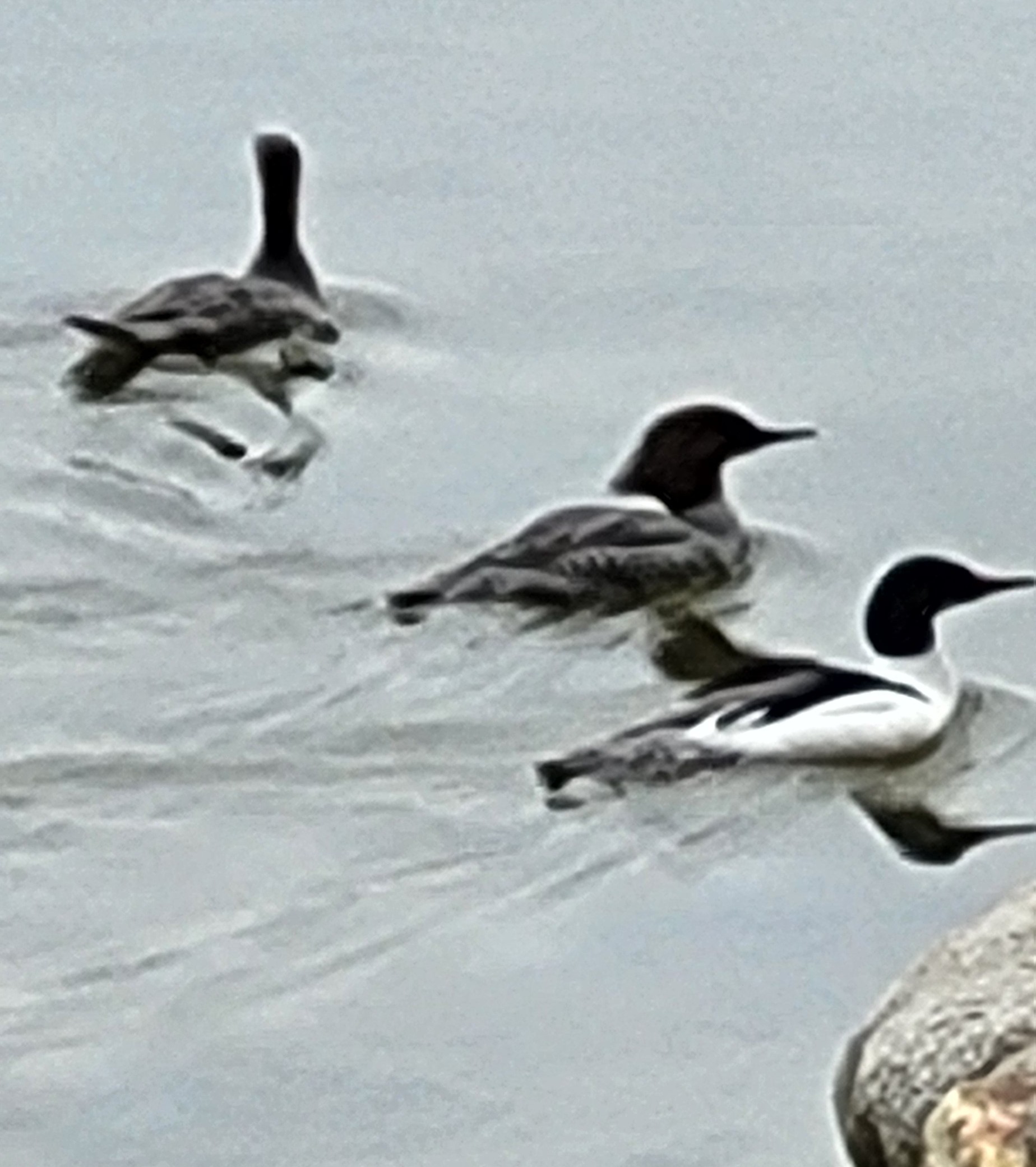
Loons on the Lake

Presence

I stuck my hands in the dirt –

                my fingernails give evidence to my folly.

I bent down,

                dug holes,

                                and implanted hope into the ground

                                declaring another year will come.

I breathed the air deeply. It cleansed my airway, my lungs, and my mind.

Now it is as if cotton balls have been pulled from my ears

and scales from my I eyes.

The world brightens around me, and I am gifted with the chatter of God’s creation.

I hear the vibrating hum of the wings of this spring’s first hummingbird,

The water ripples of two geese gliding by,

The call of the loon across the lake,

The twitter,

                                                                                twitter,

                twitter,

twitter,

                                                twitter

                                                                of the unseen.

I ask myself, “Is it this simple?”

“Can it be this simple?”

“Is it this simple?”

Rest in my garden, little one, and you will be renewed.


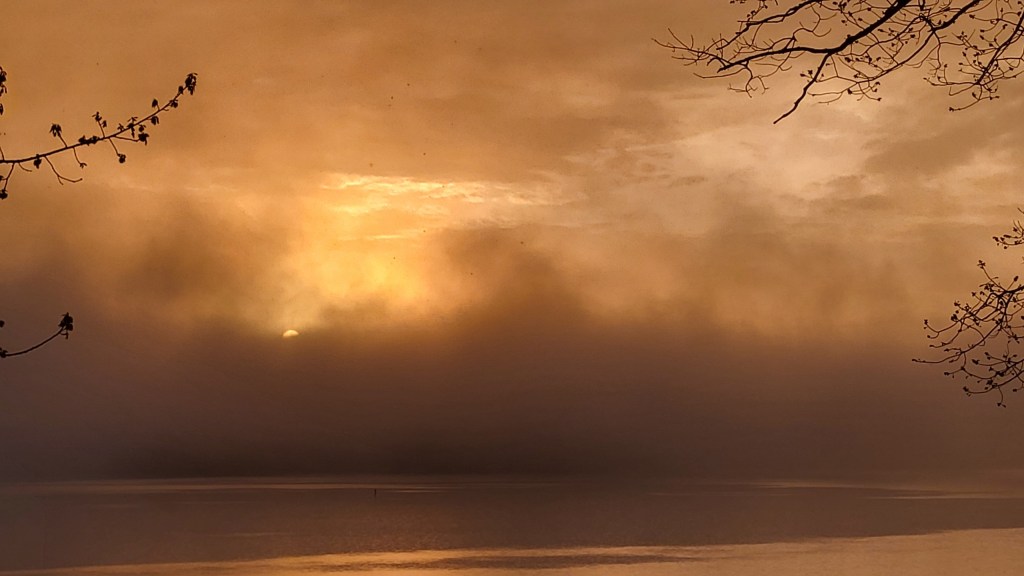
A morning picture on the lake that my husband took.

The Patient Fisherman

The fishermen have come to the lake.

They set their lines oh so patiently

                and then seem only to wait.

Are they waiting for fish?

Or are they waiting for You to come by an holler,

“Follow me!”

They do not seem anxious in their waiting,

but instead extraordinarily patient:

Not a muscle twitches.

They keep just a soft finger on the line

                ready . . .


Both of these poems were written by me and all rights are reserved. Permission is given to use in a religious or educational setting with attribution. Both pictures are taken in Wolfeboro, NH. The loons by me and the fog on the lake by George Adams. All rights reserved.

The Title & An Offering

The inspiration for the title. of the blog title


Thank You, O Lord – Blessings!

by Rev. Dawn M. Adams

The clouds turn pink

and bow goodnight.

The day is done

but not my work

because before I lay my head to pillow,

I must offer thanks

for the blessings of my day.

Thank you, O Lord,

            for the air in my lungs

            and for allowing me to wake.

Thank you for the will and

            ability to get out of bed.

Thank you for the warmth of blankets,

            the comfort of a shower,

            and all my meals today.

Thank you for the roof over my head

            and for the door which lets me out

            and in again.

Thank you for my friends and family,

            and all the people

            with whom my path crossed.

Thank you for this day, which I know not everyone was afforded.

Let me, this night, fall to sleep in the warm embrace of my many blessings.

Amen.

NOTE: All rights reserved for poetry. Permission to use in educational or religious settings provided attribution is included.

Reflection and Action

Sometimes it is hard for us to remember that a day need not be spectacular to be a blessing. To just wake up, get up, and be able to interact with others, we are blessed. It is worthy to take time to count our blessings. Sometimes, when we take the time to account for the blessings of our day, we are surprised by the many which we walked by virtually unnoticed and definitively unappreciated.