It takes a long time to create Bethlehem

This week’s mid-week meditation led to a powerful insight:

it takes a long time to create Bethlehem.

There is so much going on in the world, it came seem like a frivolous waste to gather and simply create art, but I have found this creative time to, in fact, be more important than ever. It is in these peaceful settings that we can take a moment to take stock of all that we have seen and heard and begin to try to understand our place and our calling within it all.

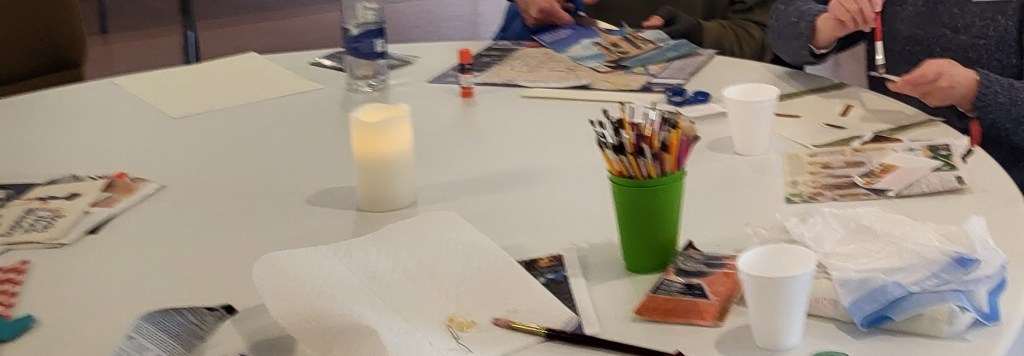
This week, when we gathered, our theme was mosaics. Given our time frame, we created our mosaics with paper, and I limited our paper to just solid colors. I offered the option of some pre-drawn blackline masters that I gathered from the internet and also had plain paper available. I tried to give people as little direction as possible because, like in each of our other weeks, the purpose is the reflection on our thoughts and the process more than the product that is produced.
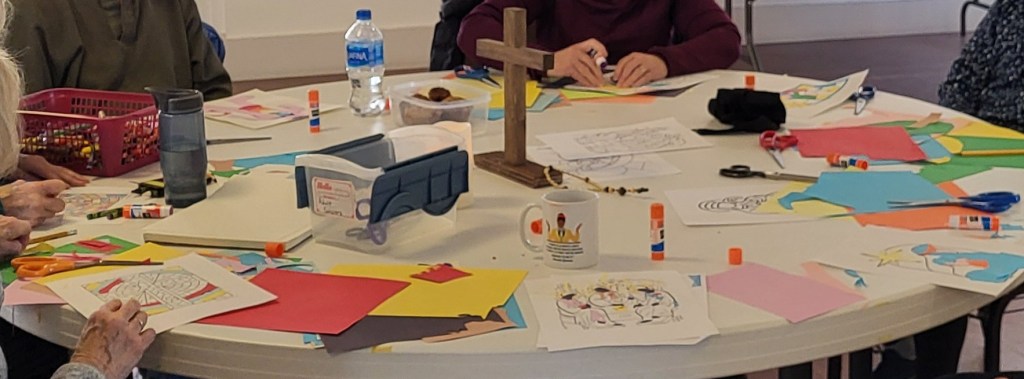
People always find our time too short and these activities could easily be done on retreat in multi-hour blocks.
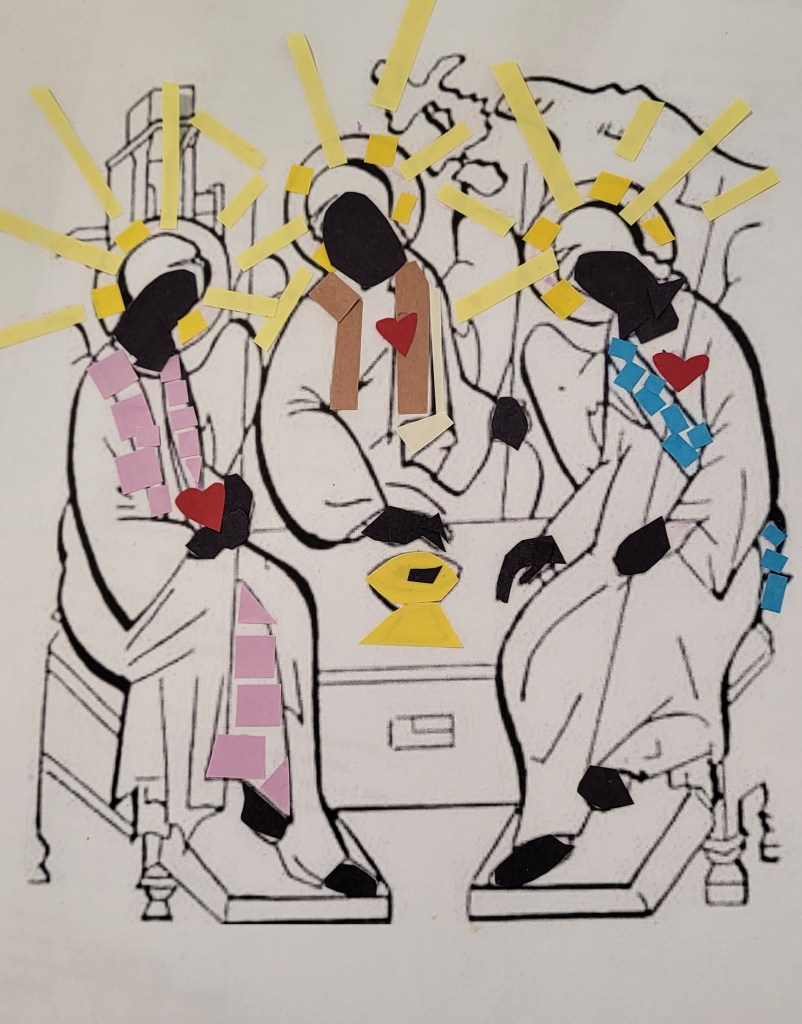
This was my creation based on Rublev’s picture of The Trinity. I was really caught by the idea that each of us have the capacity to be part of the trinity; thus the non-identification of the personalities. I also recognized how we need to be mindful of how we interact with one another. Even with our best intentions we sometimes press into each other’s space.

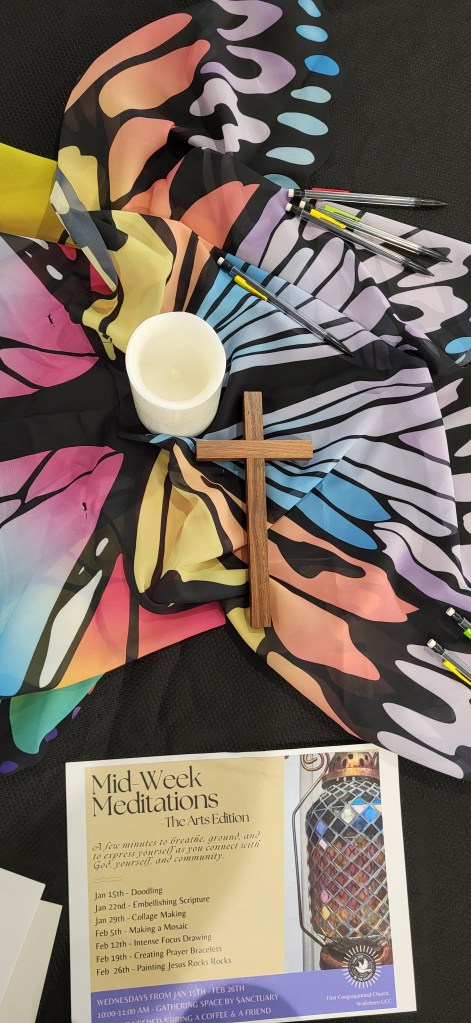
To help us be in the right mindset to create, we began our time together by putting our hands in the form of a bowl and filling our bowls with all the dread, frustration, anger, and worry that we brought in with us. After gathering it together in our own imaginary bowls, we placed the bowls below the cross in the center of the table and agreed that if stressful thoughts came our way we would give them over God through a symbolic gesture of hanging our worry on the cross. Once we released the troubles we came in with, we offered a prayer and lit our candle. Then I read a poem called Mosaic by Lily Whitelock (click here to read the whole poem) and offered a quote by Anita Krizzan. We were particularly enamored with the words of Lily’s third verse,

“Every word I know somebody else has told me.

Every smile I give someone else has shared.”

“We are mosaics. Pieces of light, love, history stars . . .Glued together with magic and music and words.

Anita Krizzan

We then created for half an hour, gathering back together to discuss and reflect on the process. There were many insights that individuals had about how they created, what they created, why they created; and there was one that took all our breath away. As one congregant shared this work:
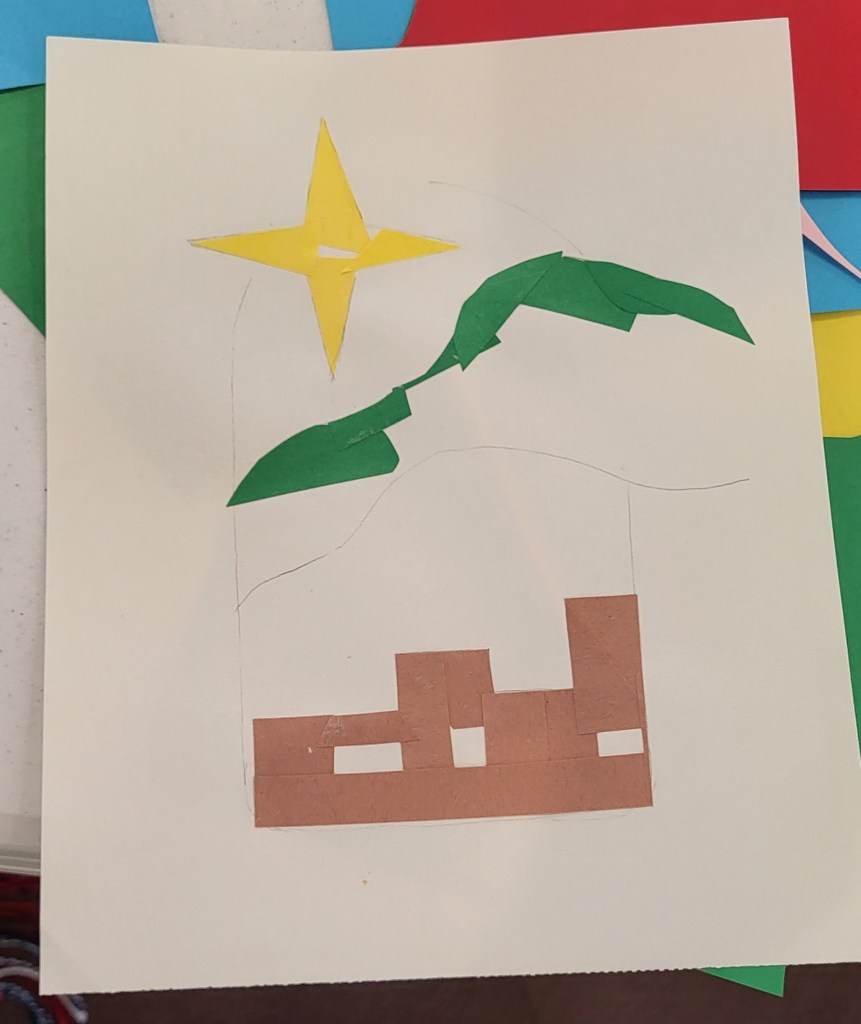
She explained that she didn’t have enough time and would be taking this home to finish. She somewhat flippantly said,

“If you didn’t know, it takes a long time to create Bethlehem.” MC

When she said that, my heart stopped. It was a reminder to us all that within the struggle and frustration that we are all feeling these day, we need to remember that to create takes time, energy, perseverance, patience, and vision especially when your vision is as complicated and simplistic as love, justice, and compassion.

We closed with a simple prayer and all went out into the world with a little more hope and with clearer understandings of where we might fit into the larger picture and how our gifts and talents might be used.

If you decide to try to create, I’d love to see what you make. Please post in the comments.

Holy One, Sometimes challenge comes not in complexity but in simplicity. As your co-creators in life, help us to step back and take stock on that which is essential. Encourage us to release that which gets in the way of your vision of heaven on earth being made real in the world. Call us into partnership with you so that together we might together create a peaceful, loving, and just world. Remind us of the time when your son was born in a simple stable. Let us remember its simplicity and yet also his power to transform the world. May you use us to do the same way. AMEN
Sacred Noticing

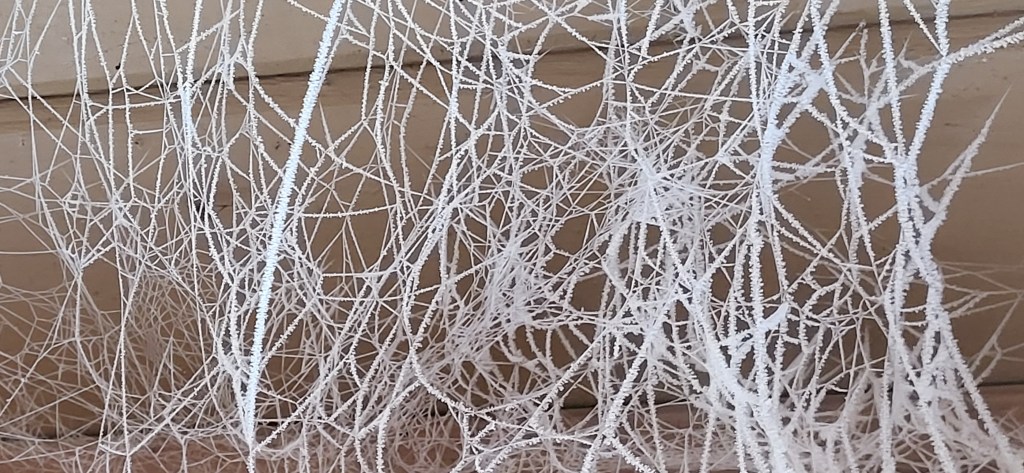
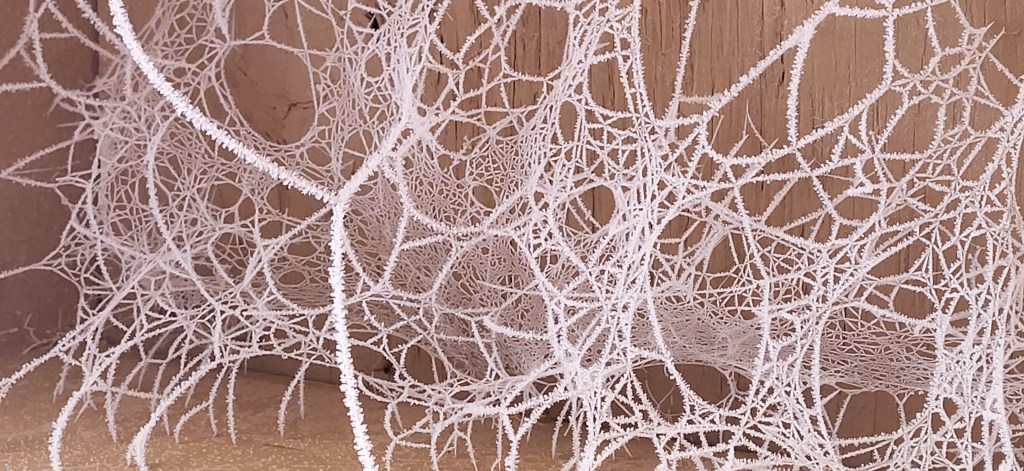
Yesterday, as I was preparing to leave for church, I looked out our backdoor to the lake and there I saw the beauty of creation in a way I had never seen it before.

I think it was a rare confluence of events that made it so. In the eves of the overhang to the porch were these fragile ice crystal cobwebs. They were invisible to the naked eye normally (not that we’ve been doing a whole lot of outdoor sitting these days in -6 degrees), but the kerosene heater with an outdoor vent had come on. It was very cold, and the eves caught the moisture.

Every moisture molecule that landed on the spider’s web froze immediately creating this crystalline creation. Each layer upon layer brought forward and made visible the beauty of the underlying design. It is surely a wonder to behold – similar to dew captured on a web as it glints in the sunlight. Part of the wonder in both of these situations is its impermanence. It was there in this moment, but within a few hours they were invisible again. It was a deep reminder to pay attention – deep attention.

When we think of prayer, we often think of words that we say out into the world, but perhaps we should expand our understanding to include that which enters into us as well. Perhaps our prayer is that moment when our breath is caught and all we can utter are syllables: “ahh”, “ohh”, “wow”.

Sacred noticing is a spiritual practice to always be on the look out for wonder and to be willing to pause the rest of the world so that you can fully take it in.

In this case, I called my husband over to behold it with me and he too offered the sacred prayer of “Wow! That is amazing.”


What have you seen today that has taken your breath away?

Listening to God through art

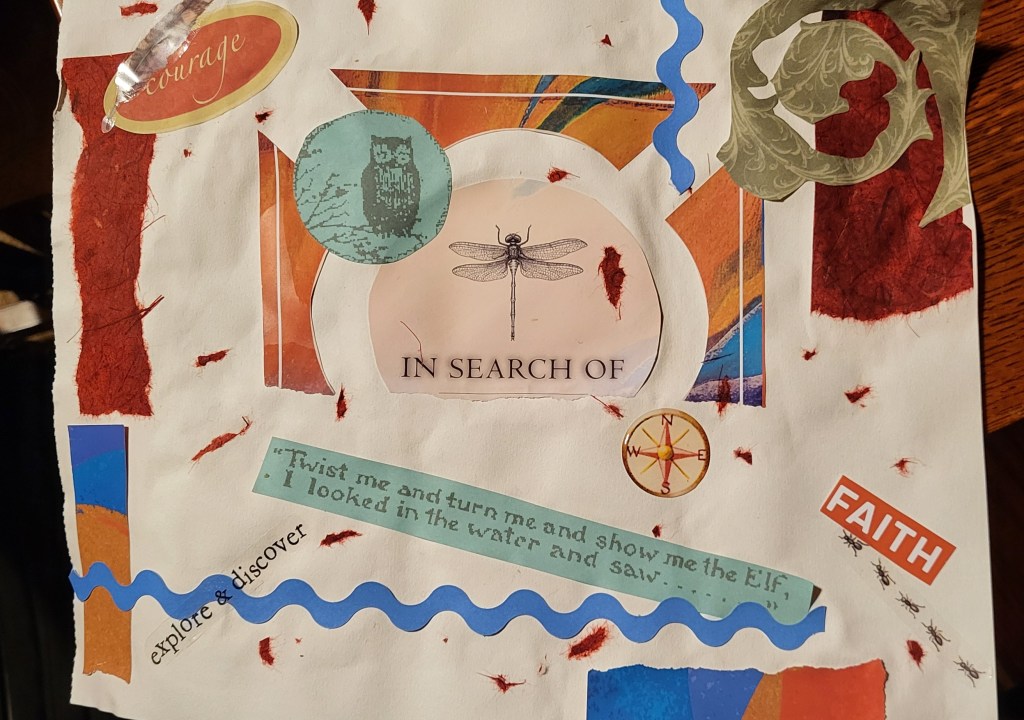
This week in our Mid-Week Meditation: the Arts Edition we did collage. Most people associate collage to the vision boards that we all made in Jr. High where we pasted pictures from magazines on a board as a way to try to capture our hopes and desires. This session was a little different than that although the basic artistic process of cutting and pasting was the same.

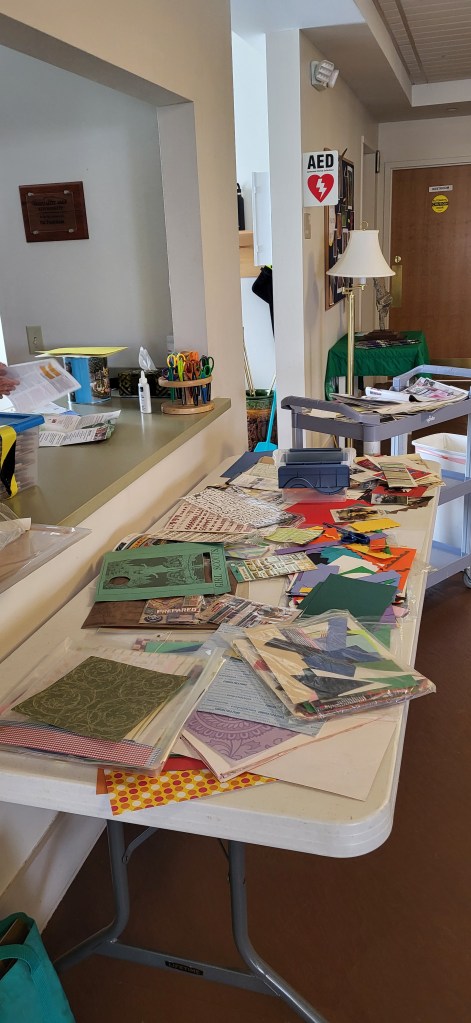
I put out a plethora of materials, but only a few magazines (and the magazines that I read are not very picture oriented). I had glue sticks and created some modge-podge type glue through a 50/50 blend of white glue and water. I had both straight edge and design edge scissors out, but had considered not putting them out so that they would have to rip and tear the materials. I had old maps, bags with designs on them, excess materials from my scrapbooking days, and other odds and ends (I encourage you to trust that what you put out will be enough)

We opened as always with lighting the candle. Then, I then offered three short readings. One a quote from Pablo Picasso about taking a lifetime to create like a child. The second a quote from Rilke about living the questions. Then finally, this passage from Journey of the Universe by Brian Thomas Swimme and Mary Evelyn Tucker:

In a simple but elegant form, awareness appears in unicellular organisms. The capacity for discernment resides in a thin outer layer of each cell, called its membrane. The membrane, through its receptor and hannel protiens, selects what is of interest and what is not, what will enter and what will not. Each cell encounters a wide spectrum of atoms and molecules and otehr ogranisms floating alongside it. Each time the cell makes contact, primitive discernment emerges.

In the vast majority of these interactions, the membrane remains tightly sealed in order to block a novel molecule form its inner life. However, in encounters with molecules of particular configurations, the cell responds very differently. the molecules of the cell’s membrane latch onto this new molecule. The cell then alters the structure of its own membrane so that this molecule can be drawn in. Because of this discernment, the new molecule becomes part of the cell’s internal milieu. In this way the cell finds and captures its “food” – the energetic molecules it can digest.

Discernment is crucial. Mistaken decisions can lead to death because the inner coherence may be broken by the strange new guest-molecule. Thus, at the edge of its body, each cell makes an elemental choice. Is this a risk worth taking? Is this food nourishing? Will this increase the chances of remaining alive?

I then tried to offer as little direction as possible so that those that participated might look deep into their own heart. The two pieces of guidance that I did offer was:

  1. Try to engage. At least, move yourself over to the materials and see what shimmers.
  2. Don’t try to “make” something. Let you mind, heart, and the materials do the creating. Later we will look to see what may have been said through them.

They then got to it. We could have used a much longer expansive time, but due to our limitations and our desire to share about the process and our insights, we only had 30 minutes to create. (One benefit to a shorter period of time is that it encourages quick decisions that rely more on our gut than our mind that often gets high-jacked with judgement.)

When they finished creating, we took 2 minutes to listen to what God and / or our own inner being might be trying to say to us. Then we thanked God for this opportunity to create. We talked about what we learned in the process of creating and then about what we noticed in our own creations.

It was amazing, as always, how different they all looked.

One of the interesting responses that I have been getting from these workshops is how not only are they a place of peace, but that the peace they find in the moment also carries with them throughout the day. I noted that this is important. There is definitely a lot of work to be done in the world AND we must balance that we self-care, time for reflection, and worship. The rhythm between the two becomes sustaining rather than depleting. It also helps us with our discernment about where to put our energy and invites us to think about problems from a more creative perspective. Activist, Attorney, and Author Valerie Kaur likens the balance we should find in life to giving birth. You cannot keep pushing. Periodically, you have to take a breath.

May we each find our balance and in our balance, may we offer the world a more grounded and compassionate perspective.

I usually try to create alongside the participants as best I can given the other things I am focusing on. Here is my creation that day.

If you take time to give it a try, I’d love to see what you create.

Illuminating the Word

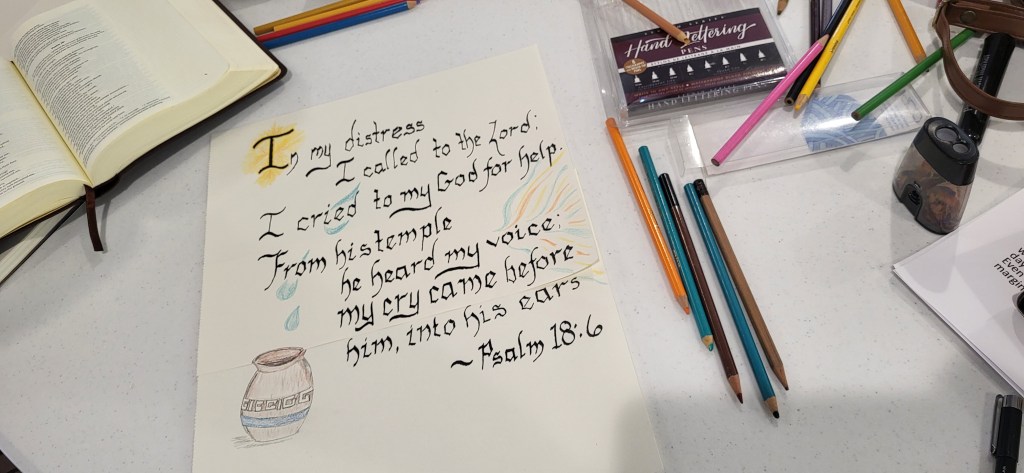
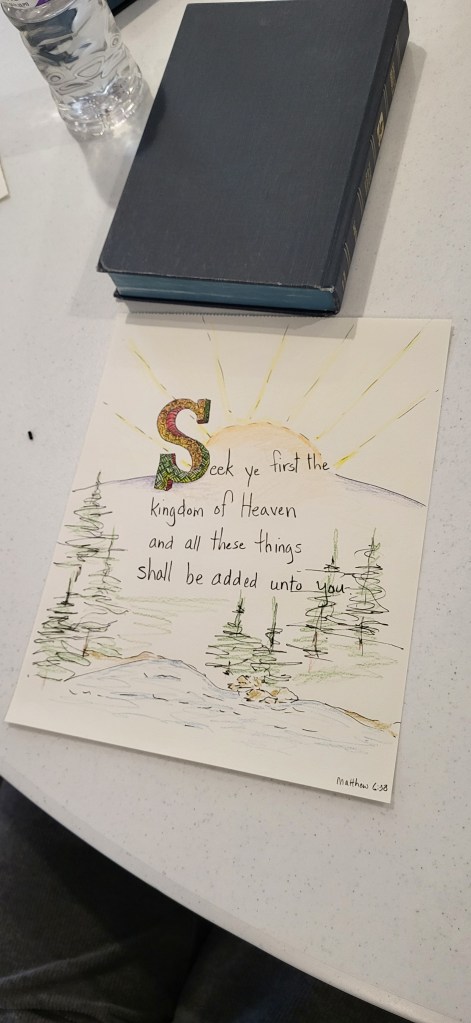
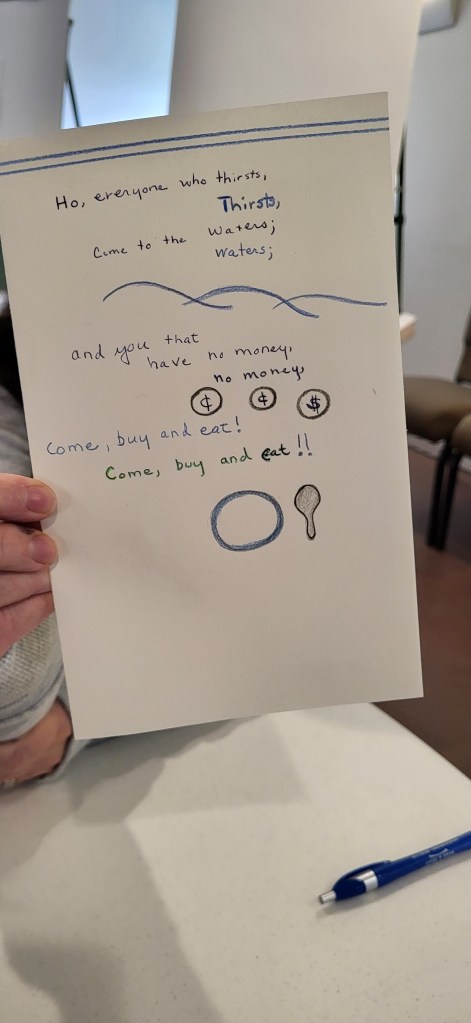
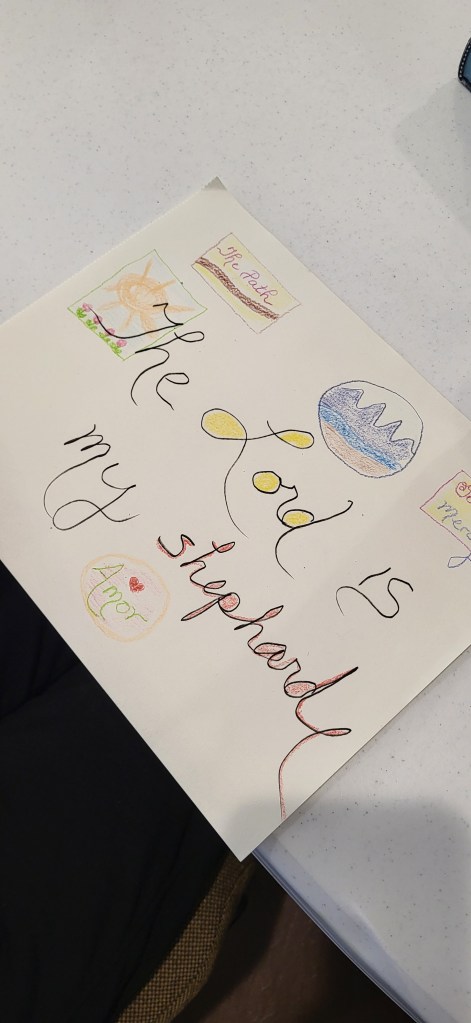
At this week’s mid-week meditation we explored the idea of Illuminating the Word: an ancient practice of embellishing our sacred scripture with drawings and designs. (A great article on the history of Biblical Illumination can be found here.)

First, we explored what has been done historically and then we engaged with the process. As we were not actually hand writing the entire Bible and only had an hour for our process, we chose single verses to illuminate. I had brought a scripture coloring book which had some scriptures pre-chosen and printed for anyone who was uncomfortable picking a text, but interestingly everyone opted to chose and write their own.

I shared with them what an important part of sermon prep for me writing the text long hand was. I have a specific way of breaking down each line and separating out prepositional phrases and such which helps me to see patterns and notice words in a different way. This personal interaction with the word helps me to integrated the text within me so that I can begin to play with it and ask it questions.

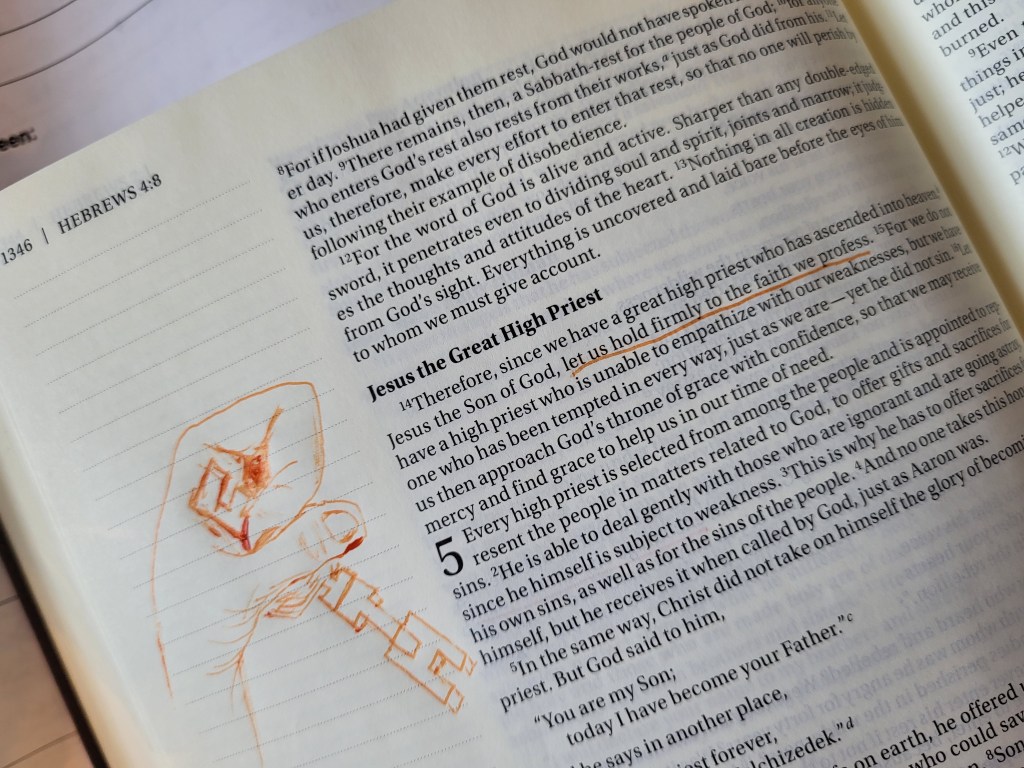
I also showed them an example of the many Bible’s these days that make space for Illumination within them these days.

This is an example of one that I have that I embellish periodically. Notice the nice wide margins.

Illuminating the text not only gives us an opportunity to get to remember the text better, but it also helps us understand it more deeply. In order to add to it, you have to listen to it with your heart first.

At the end of our time, which many of us agreed wasn’t a long enough time – some of these meditative activities you could engage in for hours, we shared our creations in the state they were in in the moment and reflected on the process.

Here are some examples of what people created.

Remember with all of these meditative art processes, it is not the product that matters. It is the process. Enjoy! I look forward to seeing what you create or hearing about your own Illuminating workshop.

A fun confirmation activity

This week we had the second of of our confirmation classes. This time we focused on Jesus. In each class, I’m trying to teach them a spiritual practice, engage them in actually reading the Bible, and connect Christian living into their everyday life.

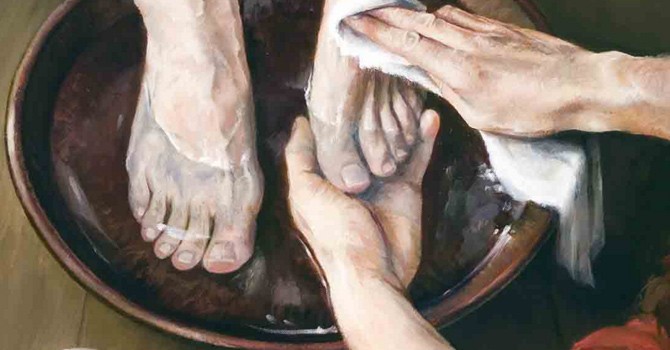
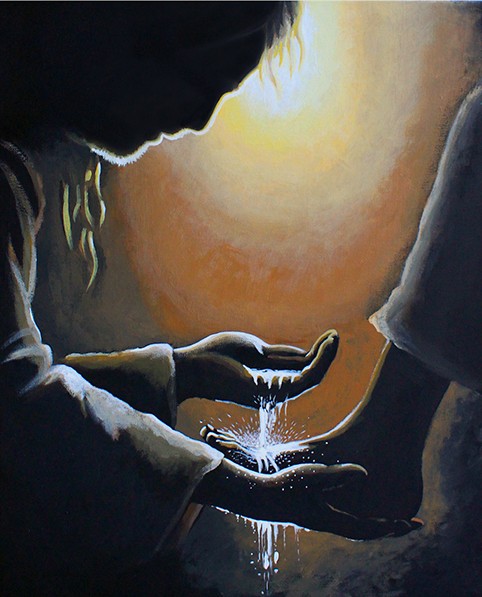
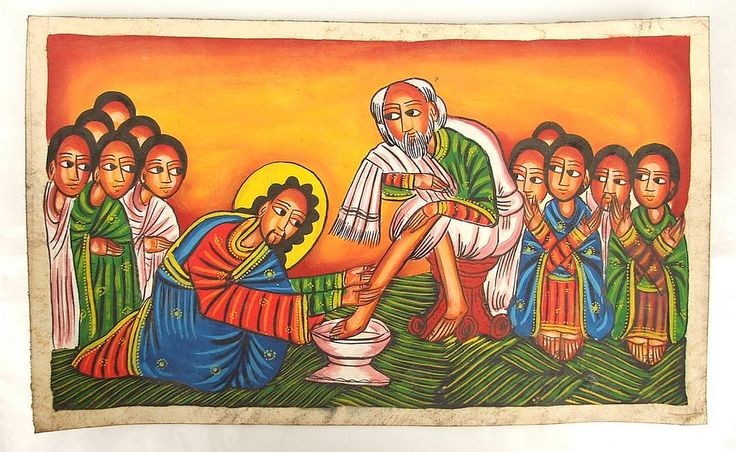
So this week we started with a visio divina from Jesus washing a disciples feet. I had them look at three different pictures for three minutes each in silence and then talk about what they liked and found compelling.

You could no doubt pick any few pictures, but I appreciated how this scaled outward and showed something I suspected that they were at least somewhat familiar with. After sharing our reflections, we talked about how this action revealed a bit about Jesus’ view on leadership and then read Mark 2:23-28 which led to again a question about Jesus’ leadership style and general theology.

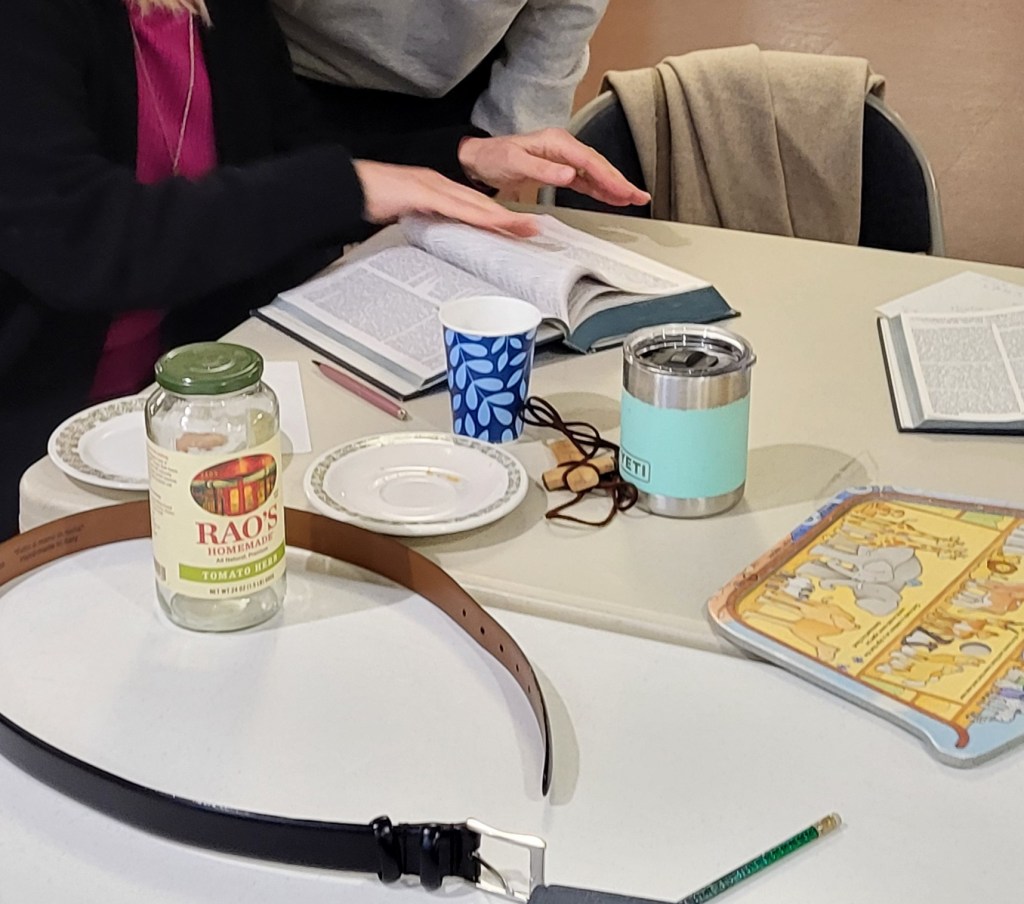
At this point, the kids needed a little fun, so we began a competitive sword drill. Sword drills are not too common in my experience of my progressive Christian arena, but I do think it can be used as a fun way to get to know the Bible. Since this is a relatively new church to me and I wasn’t sure about the kids familiarity with the Biblical text I limited our scope to just the gospels. Doing so also gave me permission to offer some vocabulary like gospel and synoptic. I was even able to talk a little bit about the potentially lost source of Q (Quelle) and the theory of when each book was potentially written.

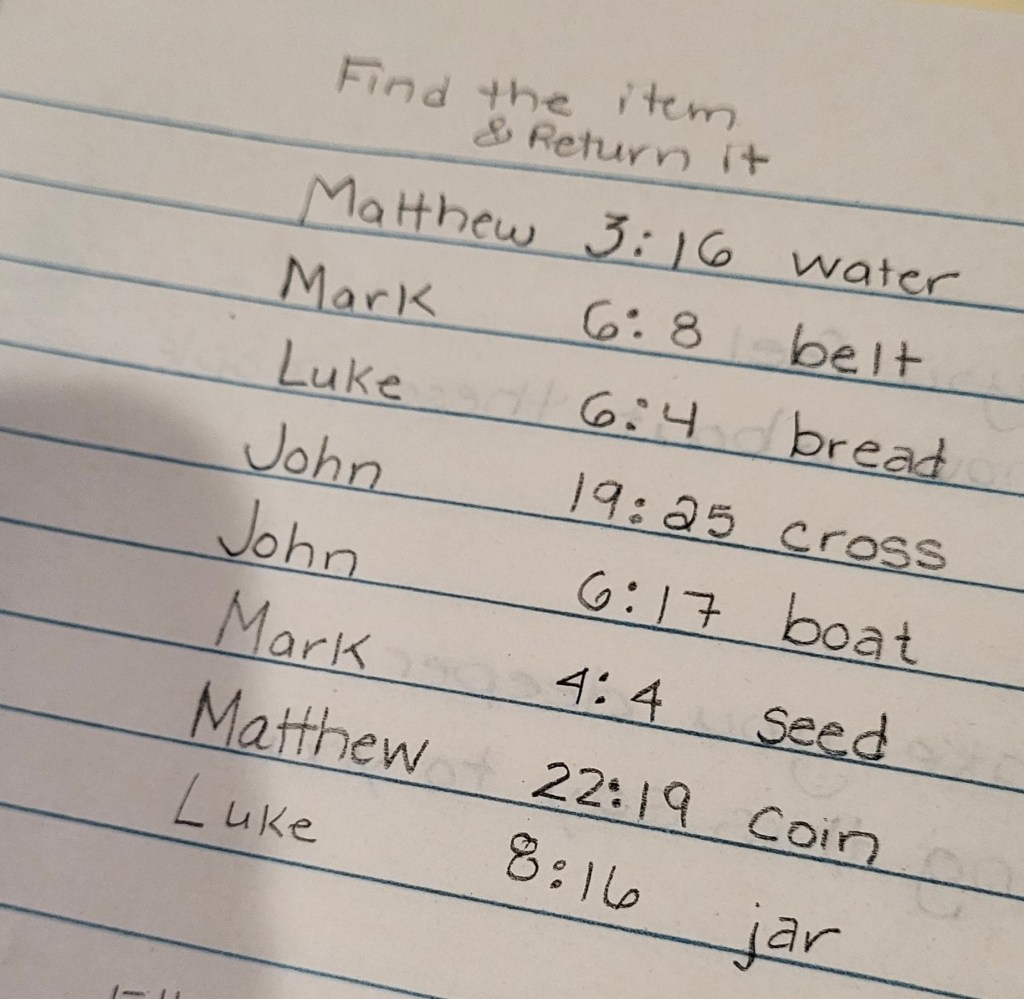
The idea of the game is to have a prewritten list of scriptures for the teams to find. When they find the scripture, the scripture will name an item that you have placed some distance away from them. They have to go find the item and return it before the other. Here is the list that I created:

BE FOREWARNED – – -I learned that I had overlooked that in the Mark 6:8 scripture there is actually a belt and bread. On the positive, the scripture says no bread, but yes a belt. So you could argue the need for a more careful reading. In may case, I accepted both answers.

Also note, that to make this even more fun, we set the kids up in competition with the parents. If you are wondering who won, the kids crushed it.

Following the game, we moved into some ethical case studies and instead of trying to devise solutions, we tried to come up with questions Jesus might ask of the situation or himself to decide what the next best step was. (The case studies were borrowed from Goodcharacter.com )

The whole class was only 90 minutes, and I dare say they even enjoyed it a bit.

Art can open your heart for God

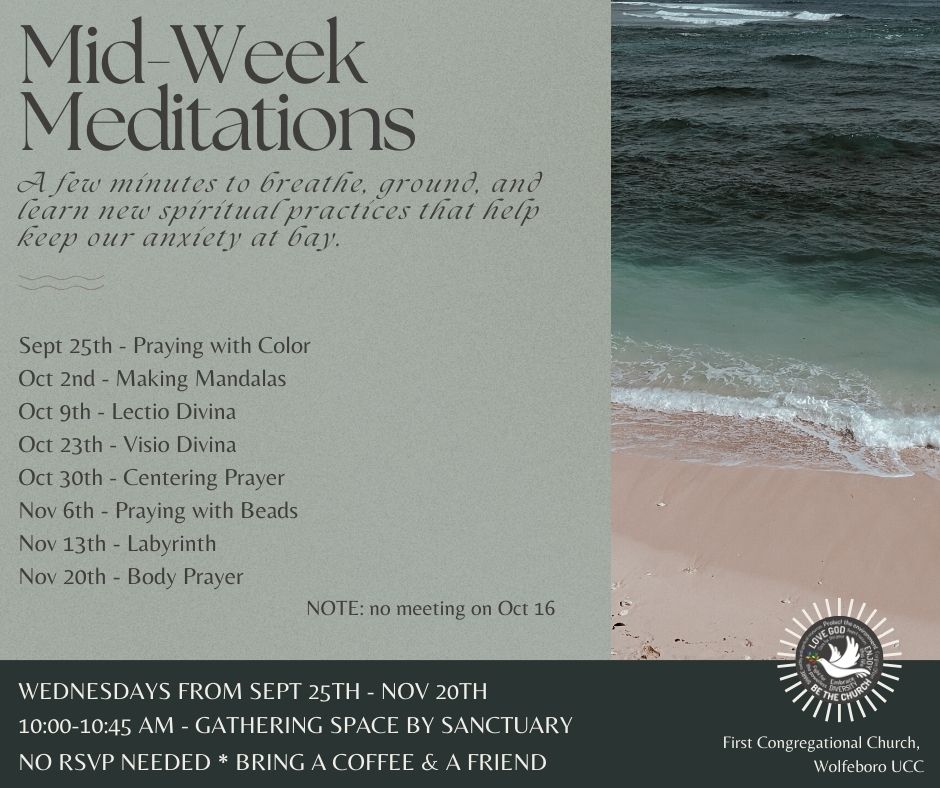
I have found that art is a great way to shut down the noise of life and settle into the arms of God. Recently, I’ve been using art as a way to help others do the same. In my new church setting, I am offering my second series of mid-week meditations. Our first meeting was this morning when we found our center by doodling.

It is funny that when we are young, teachers and others try to get us to stop doodling. “Pay attention. Don’t doodle.” “Why are you just doodling? Draw something real.” As adults though, we need to recapture the freeness of doodling.

Doodling has been associated with all sorts of benefits: everything from improved concentration to better memory, from calmer disposition to reduced cortisol levels. Artistic skill is not a necessity and there is a benefit to its repetitiveness. So doodle, doodle, doodle all day long.

Doodling isn’t as much about the art as it is about the state that you are able to bring your mind into. Different people have different reactions to it based on the mood that they are in, but in general doodling helps us open our heart and quiet our mind. In that state we become more receptive to God.

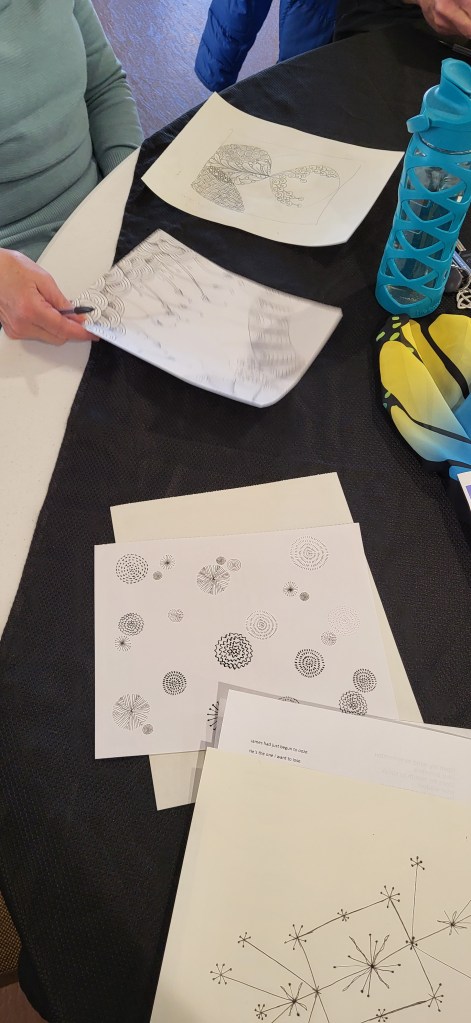
Today, I shared this practice with several congregants. The workshop was an hour long. We began with a prayer and read a poem. Then for 15 minutes we worked off of a preset doodle to warm up and get used to the process. At the end of the 15 minutes, we reflected on the process and continued on to read another poem. Then we moved to the “scary” idea of a blank sheet of paper. Where participants had another 10 minutes to draw from scratch.

Different people find their connection with God in different ways. For some, they sit in silence. For others, they prefer to pray or sing. These are all ways that we have acknowledged and are included in most worship services. Less accepted are movement and art, but they are also legitimate ways to center ourselves.

May we all be willing to experiment with how we can best hear God speak to our heart.

Resources:

Open my mind to remember
your presence.
Open my mouth to speak
your wisdom.
Open my heart to extend
your love.
Open my hands to serve
you generously.
Open my whole being
to you.

-Joyce Rupp


https://mindfulartstudio.com/art-journaling-for-healing-doodle-and-de-stress/

https://svmoa.org/taxonomy/term/48

We specifically use A.A. Milne’s poem and the one by Dan Albergotti. There was no drinking except water and tea.

Have fun and Enjoy!

May you quiet your mind enough to hear God in your life.

Here was our first Mid-Week Meditation series which was based on spiritual practices. Our next series will be the writing edition where we will focus on the written word.

Seeing things in a new light

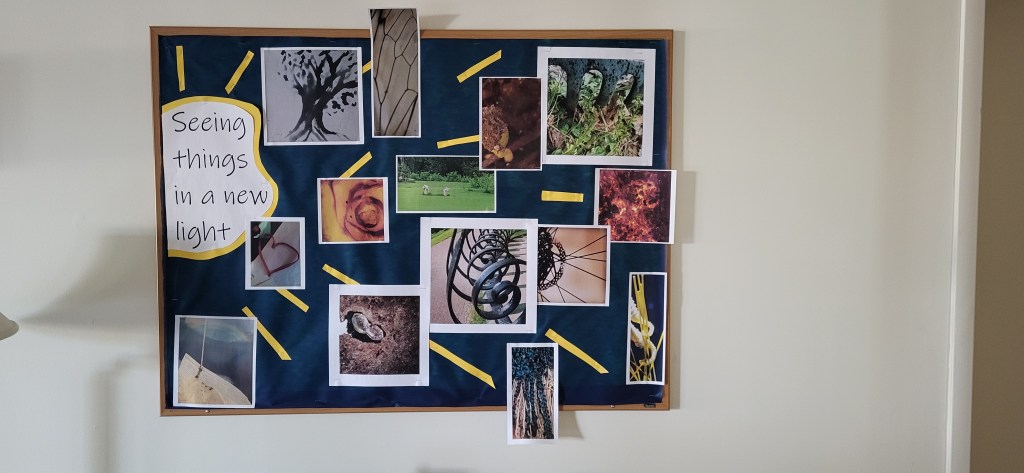
As we enter into this Epiphany Season, we are beginning a series about seeing this in a new light: basically, considering alternative perspectives. As I’ve been rattling this theme around in my mind, I have felt compelled to put together a bulletin board using some of my photography in ways that make people think more deeply.

Now one bulletin board isn’t going to change the world, but in conjunction with the remainder of the series, I hope it may affect a few people. I’ve always been amazed at how sometimes old-school ways, like a bulletin board, can really help people connect with a message.

I actually enjoyed putting this particular board together. In fact, I have really come to enjoy photography. I don’t mean fancy photography that requires special lenses or careful development; I mean Contemplative Photography. Contemplative Photography invites me to commune with the sacred and to really pay deep attention to the world. I simply use the camera on my phone to capture places where I see God is still speaking. I have been doing this so often that I began to look for an outlet for some of my pictures.

One of the places you might see some of them is in the UpperRoom’s Sight Psalms. There is no financial reward for these submission, but I find that I get the reward of hopefully opening the world in a new way for others, and it causes me to reflect even more deeply.

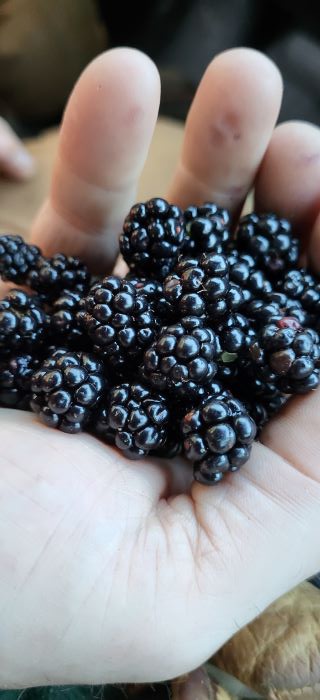
Here is the link to the one that I most recently had published and below is a modified picture of it. Interestingly, these blackberries were picked from wild blackberry bushes fresh that day I photographed them. In fact, that is how the photo started. My husband picked one and said that they were delicious and so we decided to pick more. When I saw the lush abundance in my hand, I decided I needed to capture that to remember God’s abundant care for the world. I hadn’t planted these bushes. I hadn’t weeded this garden. I was simply enjoying the harvest on this particularly lovely day. For this, I needed to be grateful, and I suspect we have all had an occurrence like this.

Abundance:

God provides. Let us be thankful for the many ways we receive what we need.

The photography will not ever make it into the Louvre, but that is not where I hope it is displayed. I’d prefer that such pictures help people open their hearts.

Changing ways / Changing Tides

A Call to Worship and Invocation used for Epiphany

Call to Worship

Leader: Things they are a changing.

People: Can you not see it? Can you not perceive it?

Leader: Things they are a changing.

People: Are you not willing to change too?

Leader: Things they are a changing.

People: If we are willing to move forward in a new way.

Leader: Things they are a changing.

People: With God all things are possible.

Leader: Things they are a changing.

People: Let us be changed by what we have seen.

Let us, with God, change the world.

Invocation 

God of new ways and new roads, pull us out of our ruts. Jolt us out of our old patterns. Give us eyes to see a better way and the courage to embrace those that we can’t fully imagine, but know deep in our bones.  Open us to the movement of your Spirit and call us forth to bravely blaze a new trail toward wholeness, health, universal love and compassion.  AMEN

Contemplate Change

Change can be scary, but it is also necessary.

When have you experienced change that you at first resisted, but eventually found to be beneficial?