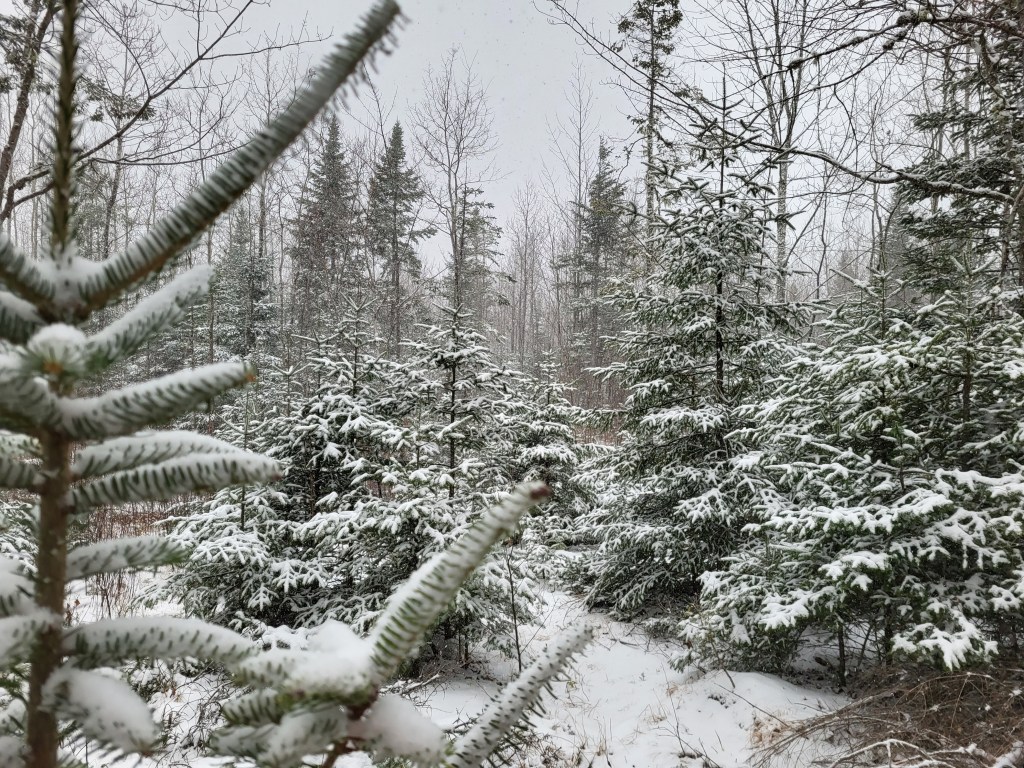
A Simple Opening Winter Meditation

I have come to appreciate starting each service after announcements, but before the prelude with a brief settling activity. Sometimes we have a breath prayer. Other times I have a somatic activity. This time helps us bridge the chaos from the outside to the peace of worship. It is like a palette cleanser between tastes of wine or courses.

This week I am planning a spoken meditation. It is below for your enjoyment. I encourage you to consider offering your own. It is an interesting way to invite your congregants into the idea of meditation and spiritual practices.


I want to take us on a brief mental journey as we settle ourselves for worship.

Find those sit bones.

Close or half-close your eyes as you are comfortable

and imagine yourself out on a hike in the forest.

It is a day like today, there is snow on the ground.

You can hear with each step the crunch of snow beneath your feet.

As you first enter the forest, it is dense and almost hard to get through.

There is a lot of undergrowth, but you know if you persist,

the path will open up;

and it does.

As things are not as closed in, you can begin to walk more easily.

As the forest opens up,  you start to notice other footprints in the snow:

Those of squirrels, hares, perhaps a fox, maybe even a deer or a moose.

The forest is silent, but you know there are critters around.

You look around as you walk.

You notice the snow in the crook of the tree branches 

and on the evergreens as they bow low.. 

You notice the way the light comes through the trees

and twinkles on the flakes.

(pause)

You start to notice that you are breathing more slowly,

that you are no longer tensing your shoulders,

that your mind has stopped racing.

(pause)

You look around at the beauty of the forest which you had no part in growing,

paid nothing to enter, and which has been here far longer than you

and you are overcome with gratitude.

You take a moment to give thanks to God – – – –

After giving thanks, you can decide to stay within the beauty of the forest as the prelude begins, or you can return here to this place and space ready for worship to begin. 

May the spirit of this quiet reflection stay with you –

and know you can return as you need it.


All rights reserved. Permission granted for use in educational or religious settings with citation.
Two for the day

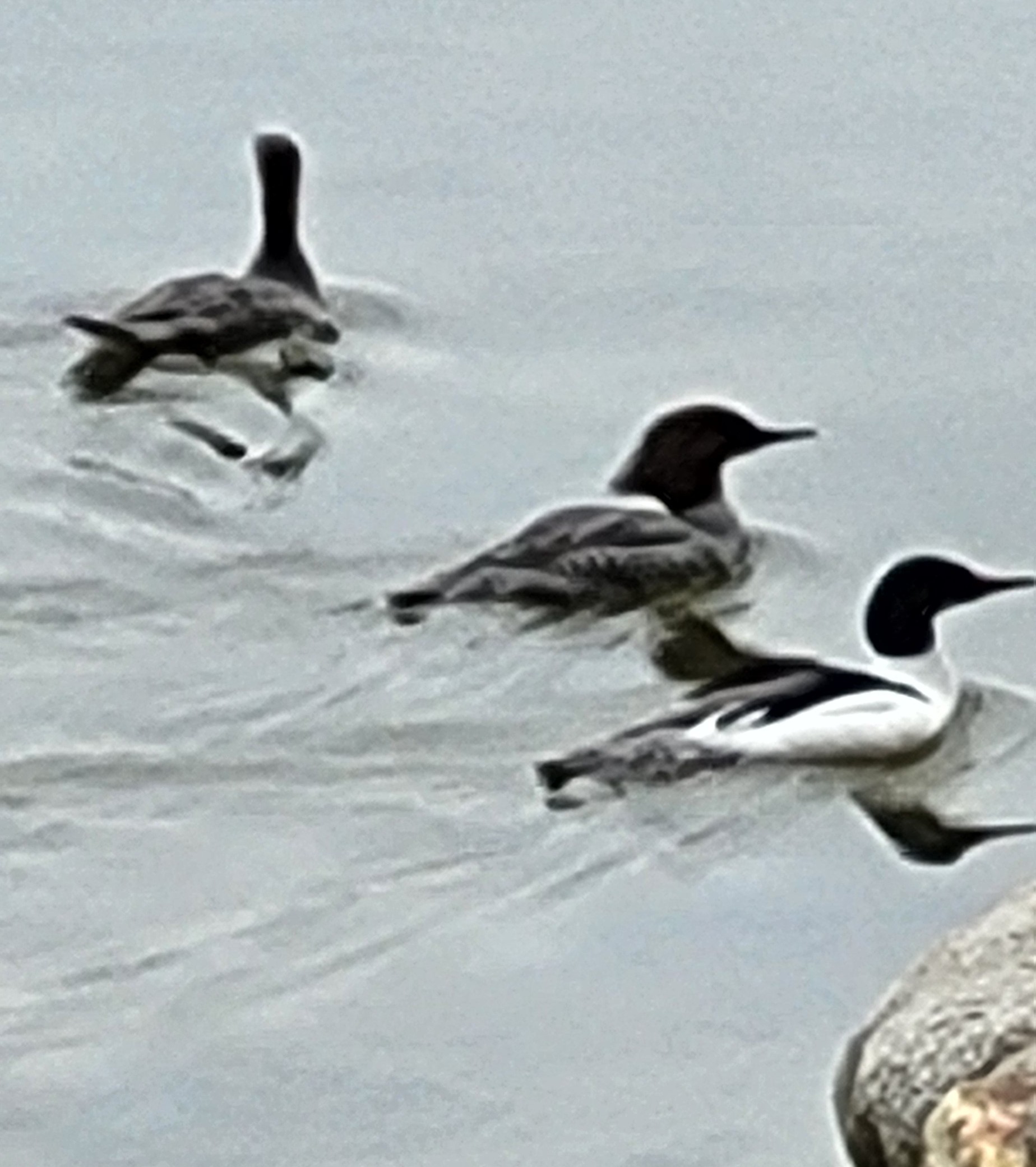
Loons on the Lake

Presence

I stuck my hands in the dirt –

                my fingernails give evidence to my folly.

I bent down,

                dug holes,

                                and implanted hope into the ground

                                declaring another year will come.

I breathed the air deeply. It cleansed my airway, my lungs, and my mind.

Now it is as if cotton balls have been pulled from my ears

and scales from my I eyes.

The world brightens around me, and I am gifted with the chatter of God’s creation.

I hear the vibrating hum of the wings of this spring’s first hummingbird,

The water ripples of two geese gliding by,

The call of the loon across the lake,

The twitter,

                                                                                twitter,

                twitter,

twitter,

                                                twitter

                                                                of the unseen.

I ask myself, “Is it this simple?”

“Can it be this simple?”

“Is it this simple?”

Rest in my garden, little one, and you will be renewed.


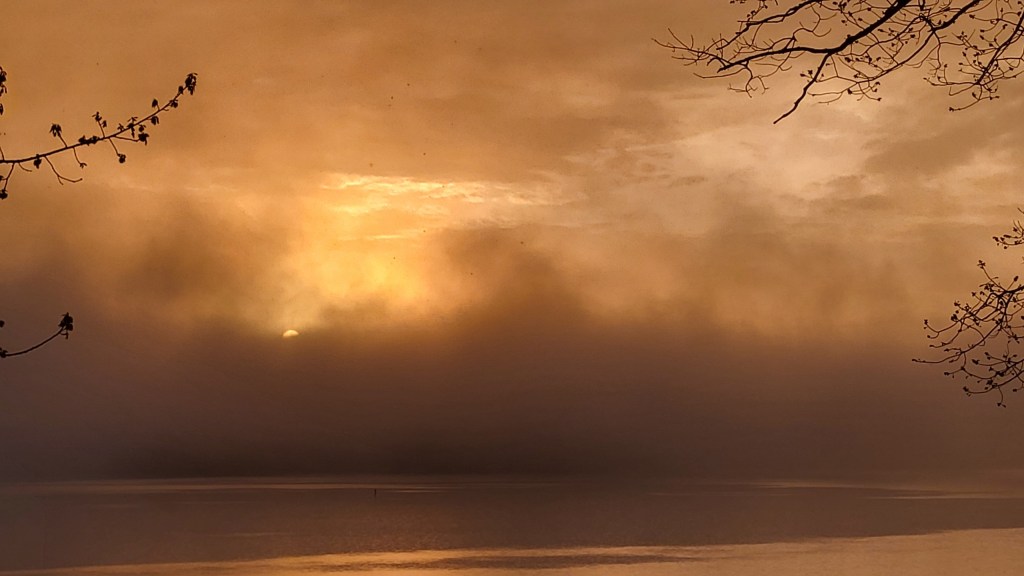
A morning picture on the lake that my husband took.

The Patient Fisherman

The fishermen have come to the lake.

They set their lines oh so patiently

                and then seem only to wait.

Are they waiting for fish?

Or are they waiting for You to come by an holler,

“Follow me!”

They do not seem anxious in their waiting,

but instead extraordinarily patient:

Not a muscle twitches.

They keep just a soft finger on the line

                ready . . .


Both of these poems were written by me and all rights are reserved. Permission is given to use in a religious or educational setting with attribution. Both pictures are taken in Wolfeboro, NH. The loons by me and the fog on the lake by George Adams. All rights reserved.

Blessed to be a blessing

“I will make you into a great nation,
    and I will bless you;
I will make your name great,
    and you will be a blessing.
I will bless those who bless you,
    and whoever curses you I will curse;
and all peoples on earth
    will be blessed through you.” – Genesis 12:2-3

Can you imagine a world where we walked around consciously blessing one another and the world around us? Might this simple act deflate the tensions and anxiety that pervade our society. Could you imagine if we sought to find the holy chard (tikkun olam) that everyone and everything contained? or sought the holy fingerprint of the potter himself (Isaiah 64:8)?

What would it mean to begin to see the world as holy, to act as if it were, and to encourage it to be so? The act of blessings is an ancient practice that perhaps we should reinstitute. Doing so does not require an act of congress, nor a majority vote, it simply means that you and I make it so. Maybe, if we are lucky, the practice will grow.

Step one is simply to look with new eyes and see the beauty before us (Remember beauty is not always external; and beauty is not always what society names it to be.).

Step two is to name what you see or what you hope to see. If I were blessing my fireplace this morning, I might offer a blessing for the many days of warmth that it has brought to my house allowing me to be comfortable and to invite friends and family within. If I were blessing a person, I might offer a hope, “May this new year offer you opportunity and growth. May you find your footing, feel your strength, and be granted the courage to live fully into who you were meant to be.”

Step three is to share your blessing. You may say it quietly to God, say it aloud to the another person, or maybe take a moment to drop a note or a text to let them know that you are thinking about them. You might even post it on social media.

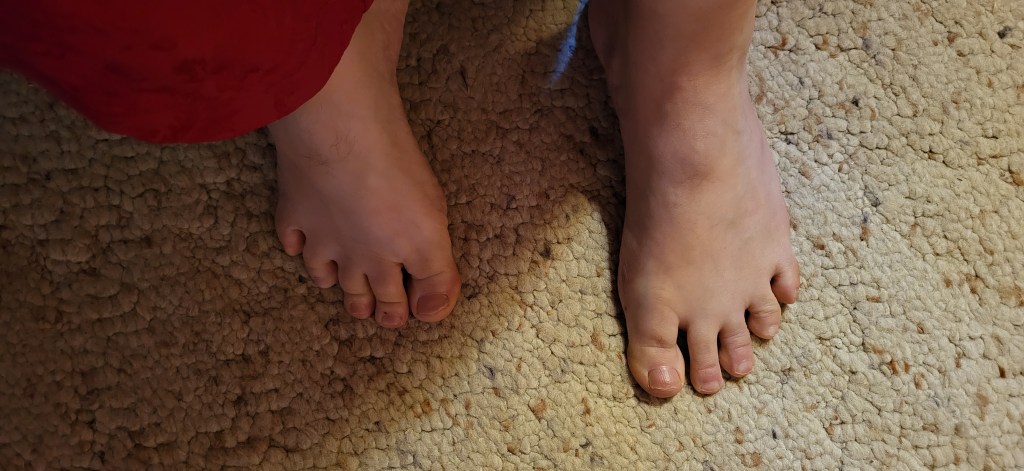
Blessings can also be done quietly within your heart as a prayer to God. I started to bless my feet in the morning after my mother passed away. She had thrown blood clots in her legs which subsequently caused an unhealing foot wound and caused the loss of several toes. My kids even were known to refer to her as Grandma Boo Boo Foot because, in their memory, she could never wear two shoes and usually need the assistance of a wheelchair. So now when my feet hit the floor I try to remember that even getting up in the morning and standing is not a blessing that everyone is afforded.

A Blessing for Feet

I wiggle them awake

and say, “Thank you!”

I touch them to the ground

and say, “Thank you!”

I press my weight upon them

and say, “Thank you!”

“Thank you little toes

and feet

and ankles.

Thank you phalanges

and metatarsals

and navicular bone.

Thank you to my muscles

and my tendons

and all the nerves

that go into each step I take.

Thank you God for my feet.

Bless them as they carry me through my day.

AMEN

NOTE: All rights are reserved for this blessing or anything published on this page. Permission is given for usage in religious or educational settings with citation.


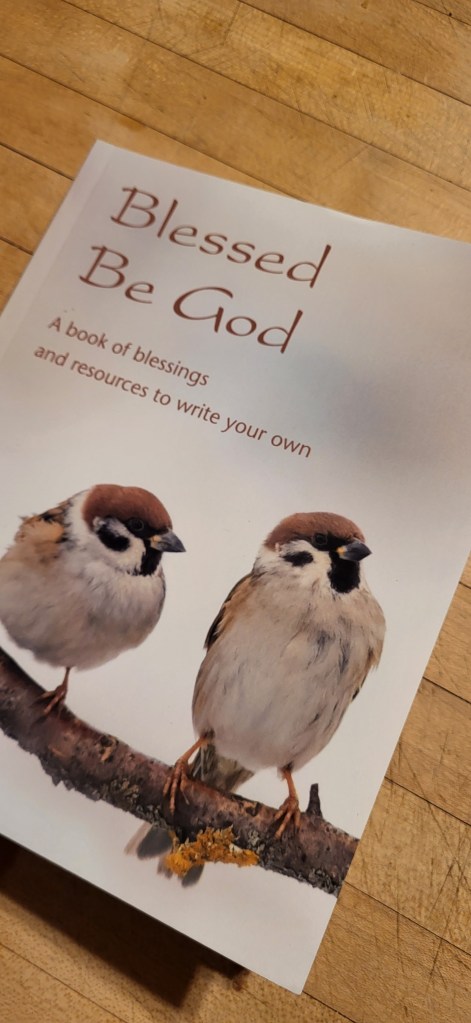
If you would like to read some more blessings including two of my own, check out Ruth Burgess’ book from Wild Goose Publications, Blessed Be God:

Sacred Noticing

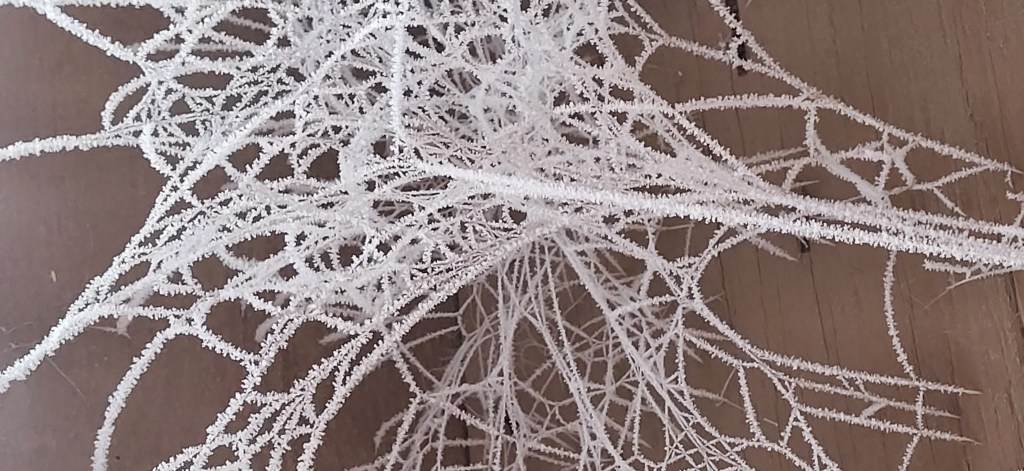
Yesterday, as I was preparing to leave for church, I looked out our backdoor to the lake and there I saw the beauty of creation in a way I had never seen it before.

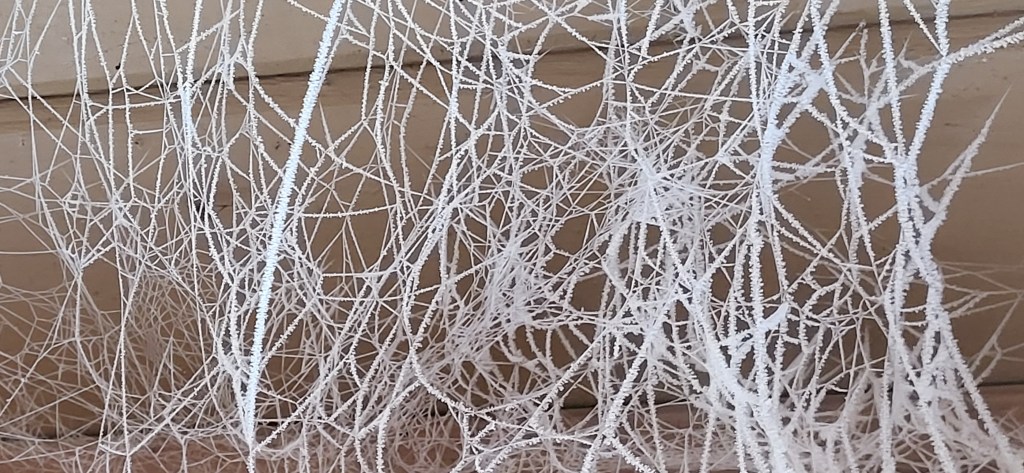
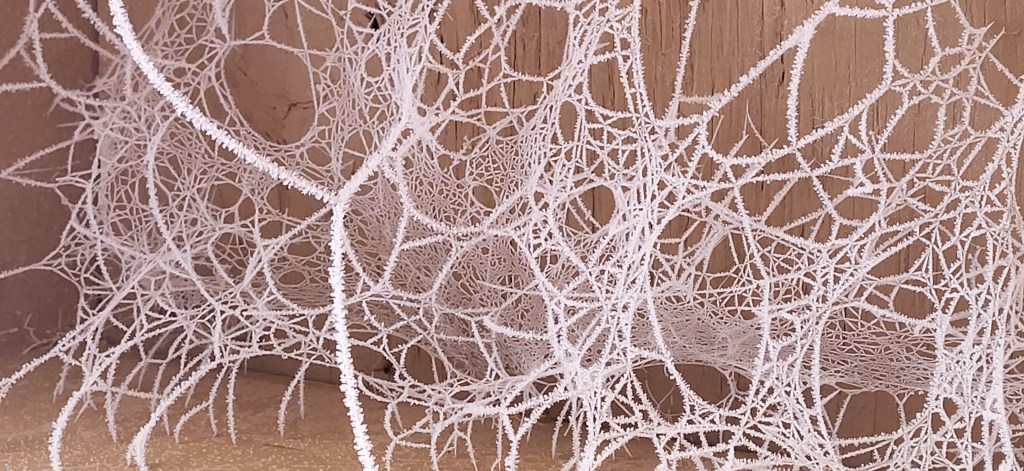
I think it was a rare confluence of events that made it so. In the eves of the overhang to the porch were these fragile ice crystal cobwebs. They were invisible to the naked eye normally (not that we’ve been doing a whole lot of outdoor sitting these days in -6 degrees), but the kerosene heater with an outdoor vent had come on. It was very cold, and the eves caught the moisture.

Every moisture molecule that landed on the spider’s web froze immediately creating this crystalline creation. Each layer upon layer brought forward and made visible the beauty of the underlying design. It is surely a wonder to behold – similar to dew captured on a web as it glints in the sunlight. Part of the wonder in both of these situations is its impermanence. It was there in this moment, but within a few hours they were invisible again. It was a deep reminder to pay attention – deep attention.

When we think of prayer, we often think of words that we say out into the world, but perhaps we should expand our understanding to include that which enters into us as well. Perhaps our prayer is that moment when our breath is caught and all we can utter are syllables: “ahh”, “ohh”, “wow”.

Sacred noticing is a spiritual practice to always be on the look out for wonder and to be willing to pause the rest of the world so that you can fully take it in.

In this case, I called my husband over to behold it with me and he too offered the sacred prayer of “Wow! That is amazing.”


What have you seen today that has taken your breath away?

Listening to God through art

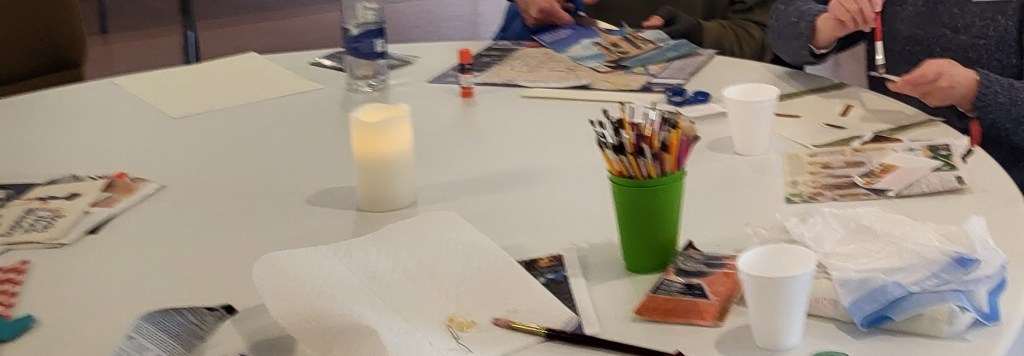
This week in our Mid-Week Meditation: the Arts Edition we did collage. Most people associate collage to the vision boards that we all made in Jr. High where we pasted pictures from magazines on a board as a way to try to capture our hopes and desires. This session was a little different than that although the basic artistic process of cutting and pasting was the same.

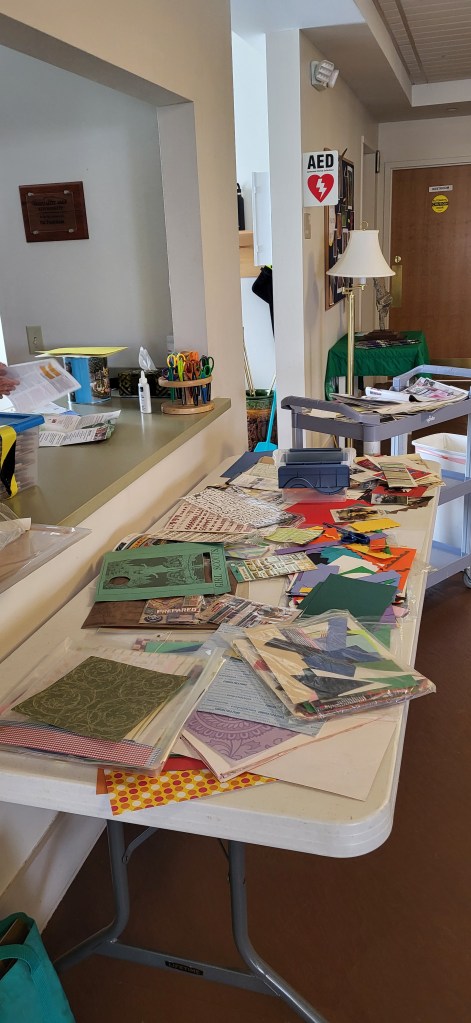
I put out a plethora of materials, but only a few magazines (and the magazines that I read are not very picture oriented). I had glue sticks and created some modge-podge type glue through a 50/50 blend of white glue and water. I had both straight edge and design edge scissors out, but had considered not putting them out so that they would have to rip and tear the materials. I had old maps, bags with designs on them, excess materials from my scrapbooking days, and other odds and ends (I encourage you to trust that what you put out will be enough)

We opened as always with lighting the candle. Then, I then offered three short readings. One a quote from Pablo Picasso about taking a lifetime to create like a child. The second a quote from Rilke about living the questions. Then finally, this passage from Journey of the Universe by Brian Thomas Swimme and Mary Evelyn Tucker:

In a simple but elegant form, awareness appears in unicellular organisms. The capacity for discernment resides in a thin outer layer of each cell, called its membrane. The membrane, through its receptor and hannel protiens, selects what is of interest and what is not, what will enter and what will not. Each cell encounters a wide spectrum of atoms and molecules and otehr ogranisms floating alongside it. Each time the cell makes contact, primitive discernment emerges.

In the vast majority of these interactions, the membrane remains tightly sealed in order to block a novel molecule form its inner life. However, in encounters with molecules of particular configurations, the cell responds very differently. the molecules of the cell’s membrane latch onto this new molecule. The cell then alters the structure of its own membrane so that this molecule can be drawn in. Because of this discernment, the new molecule becomes part of the cell’s internal milieu. In this way the cell finds and captures its “food” – the energetic molecules it can digest.

Discernment is crucial. Mistaken decisions can lead to death because the inner coherence may be broken by the strange new guest-molecule. Thus, at the edge of its body, each cell makes an elemental choice. Is this a risk worth taking? Is this food nourishing? Will this increase the chances of remaining alive?

I then tried to offer as little direction as possible so that those that participated might look deep into their own heart. The two pieces of guidance that I did offer was:

  1. Try to engage. At least, move yourself over to the materials and see what shimmers.
  2. Don’t try to “make” something. Let you mind, heart, and the materials do the creating. Later we will look to see what may have been said through them.

They then got to it. We could have used a much longer expansive time, but due to our limitations and our desire to share about the process and our insights, we only had 30 minutes to create. (One benefit to a shorter period of time is that it encourages quick decisions that rely more on our gut than our mind that often gets high-jacked with judgement.)

When they finished creating, we took 2 minutes to listen to what God and / or our own inner being might be trying to say to us. Then we thanked God for this opportunity to create. We talked about what we learned in the process of creating and then about what we noticed in our own creations.

It was amazing, as always, how different they all looked.

One of the interesting responses that I have been getting from these workshops is how not only are they a place of peace, but that the peace they find in the moment also carries with them throughout the day. I noted that this is important. There is definitely a lot of work to be done in the world AND we must balance that we self-care, time for reflection, and worship. The rhythm between the two becomes sustaining rather than depleting. It also helps us with our discernment about where to put our energy and invites us to think about problems from a more creative perspective. Activist, Attorney, and Author Valerie Kaur likens the balance we should find in life to giving birth. You cannot keep pushing. Periodically, you have to take a breath.

May we each find our balance and in our balance, may we offer the world a more grounded and compassionate perspective.

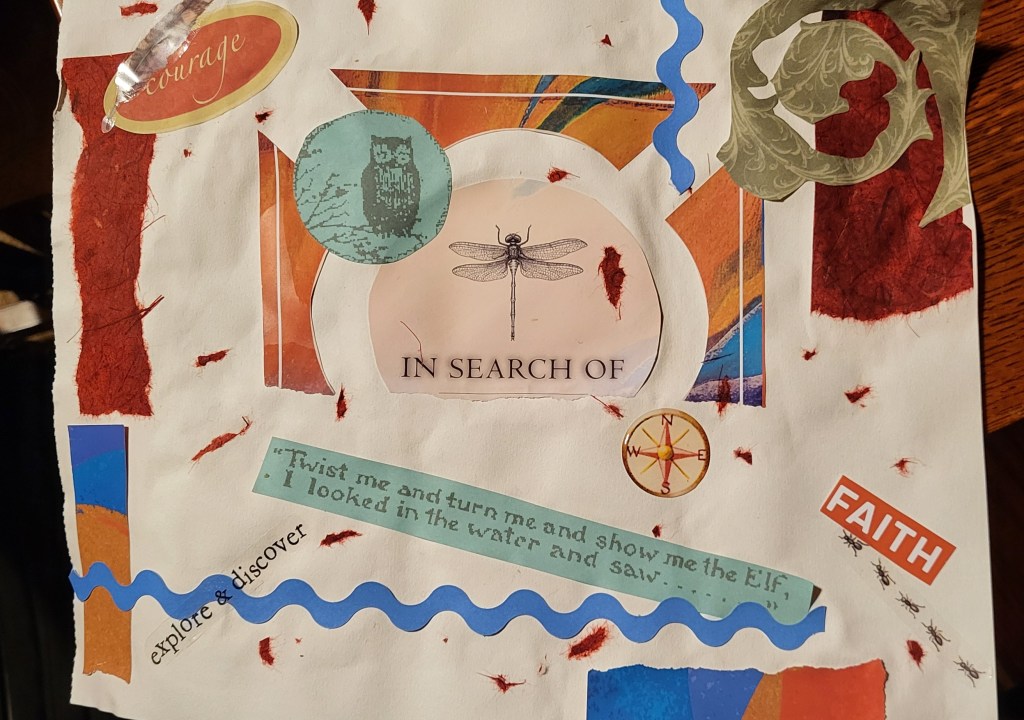
I usually try to create alongside the participants as best I can given the other things I am focusing on. Here is my creation that day.

If you take time to give it a try, I’d love to see what you create.

Making Space in a Cluttered Brain

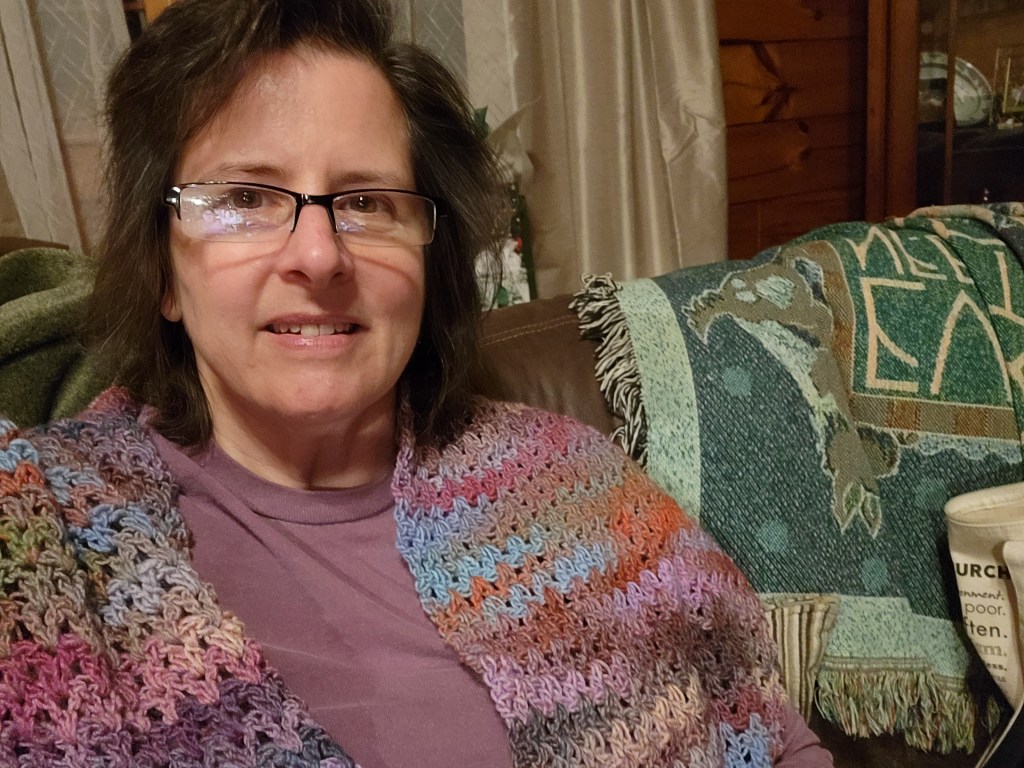
As a pastor, so much of what I do requires me to be focused. I generate an incredible amount of material each week for worship, special programing, workshops, and other activities. Sometimes my brain starts to feel like the pong game on the early Atari video games (Yes, I am dating myself, but I figure you can kind of tell that from the picture.). In order to help myself keep in the creative zone, I need to give my brain time to quiet down to think. Simple repetition allows my brain to make space to gather the thoughts that need a little time to percolate or go by too fast to gather. Recently, I have found that crocheting has become a way to offer my brain this time.

I used to crochet years ago, but haven’t in some 25 years or so. I decided to take it up again when I took my current call so that I could find a way to connect with our prayer shawl knitting team and meet some new friends at a local art shop in town.

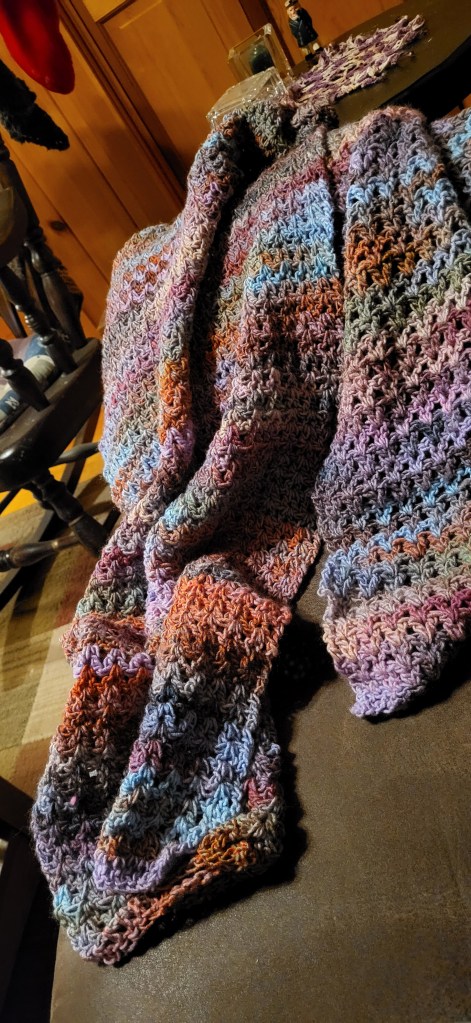
This is actually the second of my creations. The first one already shipped out for a recent new arrival into the world, the child of one of former Girl Scouts. I extended the pattern of this prayer shawl so that someone could wrap themselves comfortably in it and feel the palpable presence of God’s love around them. I have yet to know exactly where I will send it, but I trust I will know where it should go when the time is right.

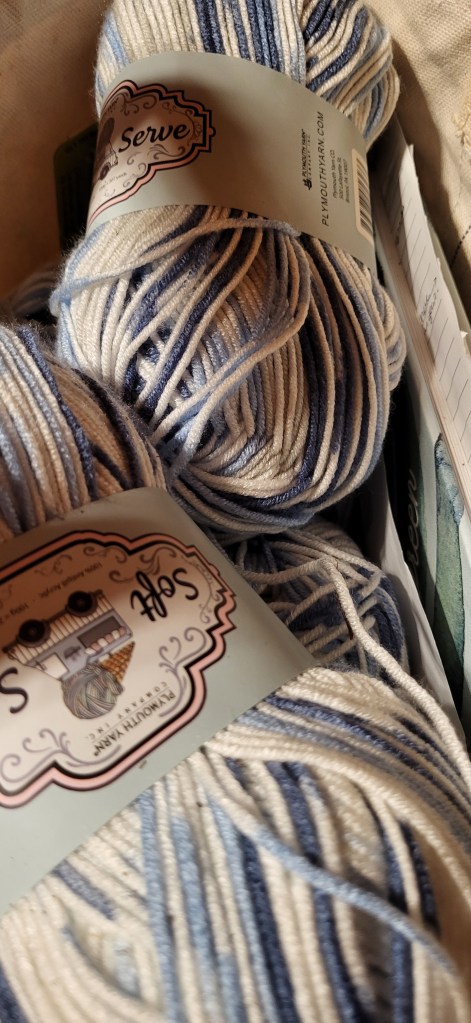
It is a good thing that this project found its logical conclusion because I have been feeling called to do another baby blanket for a new cousin who was set to be on his way. I picked up the yarn last week, and ironically as I started my first three rows on the blanket, I received a text that announced the arrival of little Theo into the world. They will really have to call this one a prayer blanket, because I will need to pray to complete it before this little one graduates from college.

Who knows how long this activity will continue offering the relaxation that I need. I know I can’t do anything too complicated and am not really looking to improve, but I am enjoying this venture into creative compassion and self-care. Who knows what projects are yet to come.

What do you do to clear the cobwebs and calm the neural pathways?